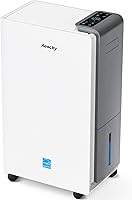
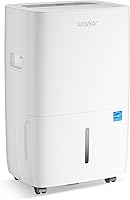
7 Best Portable Dehumidifiers From Known Brands (October 2026)
The best portable dehumidifiers include the Midea Cube 35 Pint Dehumidifier for flexible storage, the Frigidaire 22 Pint Wi-Fi Dehumidifier for small rooms, and the GE 35 Pint Dehumidifier for room changes.
On this page (4 sections)
The best portable dehumidifier for most homes in this group is the Midea Cube 35 Pint, thanks to its expandable body, large tank and Wi-Fi control. The Frigidaire fits smaller spaces, while the 50-pint picks suit larger damp rooms with different drainage needs.
A portable dehumidifier gives you room-level control without a whole-house installation. Choose based on the area you want to dry and how much moisture it holds.
Consider whether you can empty a bucket or route water to a drain, and use our guide to choosing a dehumidifier by room and features to narrow the capacity.
Our picks at a glance
-
1

-
2

-
3

- 4
 Check it
Midea 50 Pint Pump Dehumidifier
Best for upward drainage - 5
 Check it
LG PuriCare 50 Pint Wi-Fi Dehumidifier
Best for app alerts - 6
 Check it
Hisense 50 Pint Portable Dehumidifier
Best for cool basements - 7
 Check it
Hisense 50 Pint Lift-Up Pump Dehumidifier
Best for hands-free drainage
How we chose these portable dehumidifiers
We compared seven models by capacity, stated coverage, drainage choices, controls and maintenance features. The scores reflect how well each option fits common portable-dehumidifier needs, including room size and the effort required to handle collected water.
Coverage figures are starting points, not guarantees for every room. A small room with persistent moisture may need more capacity than a larger, mildly damp space.
| Product | Best for | Capacity | Stated coverage | Drainage | Our score |
|---|---|---|---|---|---|
| Midea Cube 35 Pint Dehumidifier | flexible storage | 35 pints per day | 3,500 sq ft | Removable tank or included drain hose | 8.0 |
| Frigidaire 22 Pint Wi-Fi Dehumidifier | small rooms | 22 pints per day | 1,500 sq ft | 1.7-gallon bucket or continuous drain | 7.9 |
| GE 35 Pint Dehumidifier | room changes | 35 pints per day | 3,000 sq ft | 8.5-pint bucket or drain hose connection | 7.8 |
| Midea 50 Pint Pump Dehumidifier | upward drainage | 50 pints per day | 4,500 sq ft | Bucket, hose, or built-in pump | 7.7 |
| LG PuriCare 50 Pint Wi-Fi Dehumidifier | app alerts | 50 pints per day | 4,500 sq ft | Tank or drain hose | 7.6 |
| Hisense 50 Pint Portable Dehumidifier | cool basements | 50 pints per day | 4,500 sq ft | Bucket with full indicator | 7.5 |
| Hisense 50 Pint Lift-Up Pump Dehumidifier | hands-free drainage | 50 pints per day | 4,500 sq ft | Built-in pump and included hose | 7.3 |
The best portable dehumidifiers by use
The right portable model depends on what matters most in your room: a large tank, app controls, easy movement or a pump. These picks are ordered by score, and each suits a different kind of setup.
Midea Cube 35 Pint Dehumidifier: Best for flexible storage
- 35 pints per day
- 3,500 sq ft stated coverage
- 4.2-gallon tank
- Wi-Fi control
The lift-and-twist body can run extended or nested, and its 4.2-gallon tank holds more than many portable units. Wi-Fi control and a drain hose add flexibility for a basement or other damp room.
Pros
- Large 4.2-gallon tank
- Can run extended or nested
- Wi-Fi and voice control
Cons
- Its larger tank does not remove the need to plan drainage
- Check the extended dimensions against your available space
The Midea Cube combines 35 pints of daily capacity with a 4.2-gallon tank. Midea says the tank can let the unit run up to three times longer than a conventional dehumidifier before it needs emptying.
Its lift-and-twist body runs in extended or nested form. The nested shape is intended for more compact storage, while the extended form gives you access to the larger tank.
The included drain hose supports continuous drainage. You can also remove the tank and place the unit above a sink, while Wi-Fi control through the SmartHome app and voice commands through Alexa or Google Assistant provide remote options.
Choose the Cube if you want a large tank and flexible storage shape. Skip it if you need a light unit to carry up stairs or lack room for its extended form; it weighs 39.6 lb.
For other gravity-drain options, see our dehumidifiers with drain hoses.
Frigidaire 22 Pint Wi-Fi Dehumidifier: Best for small rooms
- 22 pints per day
- 1,500 sq ft stated coverage
- Wi-Fi control
- Continuous drain option
This 22-pint model has Wi-Fi controls, a washable filter and a continuous drain option. Its lower stated coverage makes it a better fit for a small or medium room than a large damp basement.
Pros
- Wi-Fi and voice control
- Washable filter with cleaning alerts
- Low-temperature performance down to 41°F
Cons
- Smaller capacity than the 35- and 50-pint options
- The bucket needs emptying when continuous drainage is not used
The Frigidaire is the smallest-capacity pick here, with 22 pints per day and stated coverage of 1,500 sq ft. It suits a smaller or medium room better than a large, persistently damp basement.
Wi-Fi lets you adjust settings through the Frigidaire app or compatible voice devices. The washable filter has cleaning alerts, and the unit shuts off automatically when its 1.7-gallon bucket is full.
You can use the bucket or choose continuous drainage. Frigidaire describes low-temperature performance down to 41°F, which may matter in a room that tends to run cool.
Choose this model if you want app control for a modest space and are comfortable with a smaller bucket. Skip it for a large damp area where higher daily capacity is a priority.
If you’re still deciding whether the room needs mechanical dehumidification, read how to tell if you need a dehumidifier.
GE 35 Pint Dehumidifier: Best for room changes
- 35 pints per day
- 3,000 sq ft stated coverage
- Smart Dry fan control
- Built-in drain connection
The GE has wheels and pocket handles for moving between rooms, plus Smart Dry fan adjustment and a bucket alarm. Its hose connection supports continuous drainage.
Pros
- Wheels and pocket handles
- Smart Dry adjusts fan speed
- Auto restart and auto defrost
Cons
- The 8.5-pint bucket is smaller than the Midea Cube tank
- No Wi-Fi control is described
The GE combines 35 pints per day with wheels and pocket handles for moving between rooms. Smart Dry adjusts fan speed based on room humidity, and the adjustable humidistat covers settings from 30% to 70%.
For drainage, use the 8.5-pint bucket or connect a hose at the built-in drain connection. A short alarm signals when the bucket is full or missing, and a reminder prompts you to clean the washable filter.
GE also describes automatic restart after a power outage and automatic defrost. Those features may help when the unit runs in a room that needs steady moisture control.
Choose the GE if you want a mid-capacity portable unit with simple controls and move-friendly features. Skip it if app control is essential or you want a larger tank between visits.
Compare it with 70-pint dehumidifiers for big damp rooms if your space needs more capacity.
Midea 50 Pint Pump Dehumidifier: Best for upward drainage
- 50 pints per day
- 4,500 sq ft stated coverage
- Built-in pump
- Wi-Fi control
Its built-in pump can send water vertically or horizontally toward a sink or window. The 50-pint capacity and Wi-Fi controls suit larger rooms where moving collected water by hand is inconvenient.
Pros
- Built-in pump supports flexible routing
- Wi-Fi and voice control
- 50-pint daily capacity
Cons
- A standard hose is not included
- Its 1.6-gallon bucket still needs attention if pump drainage is not used
The Midea 50 Pint Pump model suits a large room where water needs to travel up or across to a sink or window. Its built-in pump handles vertical or horizontal routing, and it also supports a standard hose connection for continuous drainage.
It removes up to 50 pints per day and has stated coverage of 4,500 sq ft. Wi-Fi control through the SmartHome app and voice commands through Alexa or Google Assistant let you manage settings remotely.
The bucket holds 1.6 gallons, so it is smaller than the Midea Cube tank. If you are not using the pump or hose, check the bucket regularly and empty it when full.
Choose this model if the pump gives you a practical water route and you want app control for a large area. Skip it if you need an included hose: a standard hose is not included.
Our guide to dehumidifiers with drain hoses explains what to consider when planning drainage.
LG PuriCare 50 Pint Wi-Fi Dehumidifier: Best for app alerts
- 50 pints per day
- 4,500 sq ft stated coverage
- LG ThinQ app
- 14.3-pint tank
The LG pairs a 50-pint capacity with ThinQ app controls, monitoring and maintenance alerts. Its 14.3-pint tank is larger than the Midea 50 Pint Pump bucket.
Pros
- Remote app controls and alerts
- 14.3-pint tank
- Energy Star certified
Cons
- No built-in pump is described
- Confirm hose setup if you want continuous drainage
The LG PuriCare combines 50-pint daily capacity with Wi-Fi controls and a 14.3-pint tank. The LG ThinQ app lets you adjust settings, monitor performance and receive maintenance alerts.
Its side-access bucket is designed for one-hand lifting and emptying. It also supports continuous drainage with a hose, but no built-in pump is described, so plan a route that works with your room.
LG describes the model as Energy Star certified and quiet on low fan speed. Its stated coverage is 4,500 sq ft, a useful point of comparison when sizing a larger space.
Choose the LG if app monitoring and maintenance alerts matter to you and you prefer a larger bucket. Skip it if your drain sits above the unit and you need a pump to move water there.
For more on running costs, see how much electricity dehumidifiers use.
Hisense 50 Pint Portable Dehumidifier: Best for cool basements
- 50 pints per day
- 4,500 sq ft stated coverage
- Runs down to 38°F
- Three modes
Hisense describes operation down to 38°F, which may suit a cooler basement or crawl space. Three modes and three fan speeds give you options for different moisture conditions.
Pros
- Low-temperature operation down to 38°F
- Three operating modes
- Three fan speeds
Cons
- No built-in pump is described
- Drainage uses the bucket unless a drain setup is confirmed
The Hisense 50 Pint Portable Dehumidifier suits cooler damp spaces, since Hisense describes operation down to 38°F. Three modes, Auto, Continuous and Manual, let you choose how the unit responds to room conditions.
Three fan speeds give you a choice between airflow and noise preference. The unit has a bucket-full indicator, but no pump is described, so plan where you can empty the bucket or whether a gravity-drain setup will work.
Its stated coverage is 4,500 sq ft, and it is Energy Star certified. Check the room’s temperature and drainage needs before choosing it for a basement or crawl space.
Choose this model when low-temperature operation matters and bucket drainage works for you. Skip it if you need water pumped upward or want remote app controls.
For a persistently damp basement, compare our large-basement dehumidifier guide.
Hisense 50 Pint Lift-Up Pump Dehumidifier: Best for hands-free drainage
- 50 pints per day
- 4,500 sq ft stated coverage
- Built-in pump
- Included quick-connect hose
The built-in pump and quick-connect hose route water to a sink or window for continuous drainage. It also runs down to 38°F and offers three modes and three fan speeds.
Pros
- Pump and hose included
- Low-temperature operation down to 38°F
- Three operating modes
Cons
- Choose a drainage route that reaches a sink or window
- The 50-pint capacity may be more than a small room needs
The Hisense Lift-Up Pump adds a built-in pump and included quick-connect hose to a 50-pint unit with three modes and three fan speeds. The hose can route water toward a sink or window for continuous drainage.
Like the other Hisense pick, this model is described for operation down to 38°F and has stated coverage of 4,500 sq ft. The pump can reduce the need to empty a bucket by hand when you have a suitable route.
Choose it if unattended drainage is a priority and the hose can reach a sink or window. Skip it for a small room, where its capacity may be more than you need.
Our drain-hose dehumidifier guide covers other drainage setups.
What should you check before choosing a portable dehumidifier?
Check room size, moisture conditions, drainage and temperature before choosing a portable dehumidifier. Capacity and stated coverage help you compare models, but the way your room is used and drained matters just as much.
How should you match a portable dehumidifier to room size?
Match capacity and stated coverage to the room, then account for how damp the space is. These picks range from 22 to 50 pints per day and from 1,500 to 4,500 sq ft of stated coverage.
Measure the room rather than relying only on a broad coverage figure. A small bathroom with frequent moisture and a large basement with occasional dampness have different needs.
Use our dehumidifier size chart to compare room dimensions and capacity.
Is a tank, hose or pump best for drainage?
A bucket works if you can empty it regularly, a gravity hose works if the unit can drain downward to a suitable outlet, and a pump helps move water upward or across. Decide where the water will go before placing the unit.
The Midea Cube includes a drain hose, the GE has a hose connection, and the Midea and Hisense pump models offer pump drainage. Check that the hose reaches the drain without a kink and that the outlet is suitable for steady water flow.
Can a portable dehumidifier work in a cool basement?
Some models are described for cooler operation, but their minimum temperatures differ. Frigidaire specifies performance down to 41°F, while the two Hisense 50-pint models are described for operation down to 38°F.
Compare the stated limit with the room’s usual temperature and follow the unit’s instructions. If the basement is colder than the model’s stated range, choose a unit suited to those conditions.
Do Wi-Fi controls matter on a portable dehumidifier?
Wi-Fi helps you adjust settings or check a unit without walking over to it. Midea, Frigidaire and LG describe app control, while the other picks focus on controls at the unit.
Choose Wi-Fi if remote adjustment or alerts fit your routine. If you’ll manage the appliance in person, capacity, drainage and filter care may be more useful priorities.
How should you set up and care for a portable dehumidifier?
Set the unit on a level, stable floor with its air intake and outlet unobstructed. Leave the space around it clear as directed in its manual, and keep it near a suitable power outlet and drainage route.
If you use a bucket, check it often until you learn how quickly it fills in your room. With a continuous drain, confirm the hose stays in place and water flows to the intended outlet; with a pump, make sure the hose reaches the sink or window.
Clean a washable filter on the schedule in the manual, and respond to any filter reminder. Before moving the unit, switch it off, empty the bucket and disconnect the hose so water does not spill.
What common mistakes make a portable dehumidifier harder to use?
The most common setup mistakes are choosing by coverage alone, blocking airflow, ignoring drainage and forgetting filter care. Each can make the unit less convenient or keep it from matching the room’s needs.
Don’t assume a stated square-foot figure guarantees the same result in every damp space. Don’t put a hose where it can kink or drain uphill unless the model has a pump, and don’t leave a bucket model unattended for long periods before you know how fast it fills.
Avoid moving a unit while it contains water, and don’t let dust build up on a washable filter. A clear location, workable drainage route and regular filter cleaning make day-to-day use easier.
Which portable dehumidifier should you choose?
Choose the Midea Cube for its large tank and flexible shape, the Frigidaire for a smaller room, or the GE for wheels and room-to-room use. For a larger damp space, choose the Midea pump model for flexible water routing, the LG for app monitoring and a larger bucket, or a Hisense for cooler conditions, with its pump version if you need water moved to a sink or window.
Before you buy, measure the room, consider how damp it stays and decide how you’ll drain the water. For a room-by-room shortlist, see our best dehumidifiers for the home, then use ways to lower humidity in your house to address moisture sources alongside your unit.
Our top 3 picks at a glance
-
1
-
2
-
3
Frequently asked questions
What makes a dehumidifier portable?
A portable dehumidifier is a self-contained unit you can place in a room and move when needed. Wheels and handles make a heavier model easier to relocate, while its tank or drain setup affects how often you need to handle water.
Check the unit's dimensions and weight against doorways, stairs and the space where you plan to use it.
Which portable dehumidifier size should I choose?
Match capacity to the room and its moisture conditions. The picks here range from 22 to 50 pints per day, with stated coverage from 1,500 to 4,500 sq ft.
Those coverage figures are not a substitute for measuring your room and considering how damp it is.
Our dehumidifier sizing and features guide explains what to compare.
Is a built-in pump useful in a portable dehumidifier?
A built-in pump can move collected water toward a sink or window, which helps when gravity drainage is not practical. The Midea 50 Pint Pump and Hisense Lift-Up Pump include pump drainage; the Hisense also includes a quick-connect hose.
Check that the route reaches a suitable drain before you set up the unit.
Can I move one dehumidifier between rooms?
Yes, if you can move it safely and the unit is suitable for each room. GE describes wheels and pocket handles, while other models may be heavier or have different carrying features.
Empty the bucket and disconnect any hose before moving a unit.
For room-specific choices, see our home dehumidifier picks by room.
Should I choose a portable or whole-house dehumidifier?
Choose a portable unit when you want to manage humidity in one room or move the appliance between spaces. A whole-house system is designed for broader coverage and may involve a different installation setup.
If you need a fixed system for several rooms, compare our whole-house dehumidifier guide before choosing.