Best 70 Pint Dehumidifiers for Big Damp Rooms: Top 7 Picks (October 2026)
The best 70 pint dehumidifiers for large damp rooms include the Waykar 80 Pint 5 for large damp rooms, the Waykar 80 Pint 2025 Dehumidifier for cool basements, and the Yaufey 70 Pint Commercial Dehumidifier for unattended drainage.
On this page (5 sections)
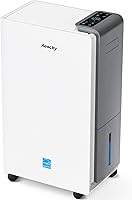
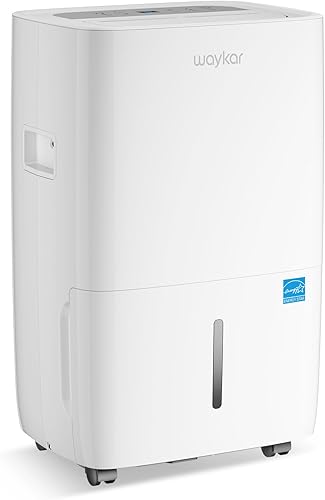
The Waykar 80 Pint 5,000 Sq Ft Dehumidifier is the top pick for a large damp room because it offers more capacity than a 70 pint unit, ENERGY STAR certification and both tank and hose drainage. If you want a true 70 pint model, the Yaufey suits continuous drainage, while the AIRPLUS Max offers several operating modes.
A pint rating is a daily moisture removal figure, not the amount of water a tank holds. Compare the conditions behind each figure, the room coverage guidance and how you plan to remove collected water.
For more choices by room type, see our best dehumidifiers for the home. Our dehumidifier size chart can help match capacity to a room, and the large basement dehumidifier guide covers other big-room options.
Our picks at a glance
-
1
-
2

-
3
 Best for unattended drainage
Yaufey 70 Pint Commercial Dehumidifier
7.4/10 our score
See it on Amazon
- 4
 Check it
AIRPLUS Max 70 Pint Quiet Dehumidifier
Best for adjustable room modes - 5
 Check it
ALORAIR Sentinel HS35 70 Pint Dehumidifier
Best for crawl spaces - 6
 Check it
ALORAIR Helios MP35 70 Pint Dehumidifier
Best for raised drainage - 7
 Check it
AIRPLUS 70 Pint Dehumidifier With Hose
Best for simple hose setup
How we chose 70 pint dehumidifiers for large rooms
The best choice depends on usable capacity, drainage and where the unit will sit. We compared stated pint ratings alongside test conditions, room coverage, drainage options and features that matter in a basement or utility space.
A “70 pint” label can mean different things. Some models give a daily output under high temperature and humidity, while the ALORAIR crawl space models also distinguish their saturated capacity from their AHAM capacity.
Treat those figures as different conditions, not direct equivalents.
Our score weighs specs, features and buyer feedback against what you're shopping for. These picks are ordered from highest score to lowest, with the use case for each one called out.
Compare the best 70 pint dehumidifiers
The Waykar 80 pint models lead on stated capacity and coverage, while the 70 pint options vary in room guidance and drainage. Use the comparison to narrow down the right type before checking each model's details.
| Product | Best for | Capacity | Coverage | Drainage | Our score |
|---|---|---|---|---|---|
| Waykar 80 Pint 5,000 Sq Ft Dehumidifier | large damp rooms | 80 pints per day | Up to 5,000 sq ft | 4.3 L tank or included gravity hose | 8.6 |
| Waykar 80 Pint 2025 Dehumidifier | cool basements | 80 pints per day at 95°F and 90% RH | Up to 5,000 sq ft | 3.5 L tank or included 3.3 ft hose | 8.2 |
| Yaufey 70 Pint Commercial Dehumidifier | unattended drainage | 70 pints per day | Up to 5,000 sq ft | Continuous gravity hose | 7.4 |
| AIRPLUS Max 70 Pint Quiet Dehumidifier | adjustable room modes | 70 pints per day at 86°F and 90% RH | Up to 4,500 sq ft | Continuous option; tank capacity 0.7 gallons | 7.5 |
| ALORAIR Sentinel HS35 70 Pint Dehumidifier | crawl spaces | 35 pints per day under AHAM conditions | Up to 1,000 sq ft | Continuous gravity hose | 7.6 |
| ALORAIR Helios MP35 70 Pint Dehumidifier | raised drainage | 35 pints per day under AHAM standards | Up to 1,000 sq ft | Gravity hose or built-in pump | 7.3 |
| AIRPLUS 70 Pint Dehumidifier With Hose | simple hose setup | 70 pints per day | Up to 4,500 sq ft | 3.9 ft hose or 0.7 gallons tank | 7.2 |
The best large-room dehumidifiers by use
The strongest pick for you depends on whether you need high capacity for a large room, a drain hose for ongoing use or a compact unit for a crawl space. Each option below has a distinct fit.
Waykar 80 Pint 5,000 Sq Ft Dehumidifier: Best for large damp rooms
- 80 pints per day at 95°F and 90% RH
- Coverage up to 5,000 sq ft
- ENERGY STAR certified
- Tank and continuous hose drainage
More capacity than the 70 pint class gives this Waykar room to handle large, damp areas. Tank and hose drainage let you choose between manual emptying and continuous flow.
Pros
- 80 pints per day
- ENERGY STAR certified
- 30%–80% humidity control
Cons
- Larger capacity may be more than a smaller room needs
- Gravity drainage needs a suitable drain location
The Waykar 80 Pint 5,000 Sq Ft Dehumidifier fits a large room with persistent dampness if you want more rated capacity than a 70 pint model. It removes up to 80 pints per day at 95°F and 90% RH, with coverage up to 5,000 sq ft.
Waykar gives an adjustable humidity range of 30% to 80%, a 4.3 L tank and an included gravity hose. The 90° auto swing helps distribute air across the room, and the unit is ENERGY STAR certified.
This residential model is intended for a basement, bathroom or other large living area. It weighs 31 lb, so plan a spot near the drain if you expect to use the hose for continuous drainage.
Choose it if you need broad coverage and want manual or continuous drainage. If the damp area is modest, compare a smaller model in our best dehumidifiers for the home guide before choosing the larger capacity.
Waykar 80 Pint 2025 Dehumidifier: Best for cool basements
- 80 pints per day at 95°F and 90% RH
- 62 pints per day at 86°F and 80% RH
- Self-drying after shutdown
- Auto-defrost down to 41°F
This Waykar pairs 80 pint capacity with self-drying and auto-defrost for cooler basements. The stated 62 pint daily rate at warmer, damp conditions gives a useful second reference point.
Pros
- Self-drying function
- Auto-defrost down to 41°F
- Tank and hose drainage
Cons
- Rated capacity changes with test conditions
- Gravity drainage needs a drain below the unit
The Waykar 80 Pint 2025 Dehumidifier is suited to cooler basement conditions because it combines auto-defrost down to 41°F with a self-drying function that runs after shutdown. It is rated for up to 80 pints per day at 95°F and 90% RH, and 62 pints per day at 86°F and 80% RH.
That second figure is for a warm, damp setting and gives context alongside the hotter rating. A 3.5 L tank handles manual emptying, or you can connect the included 3.3 ft hose for continuous gravity drainage.
Its four casters and top handle help you move it between rooms. At 28.6 lb, it is lighter than the other Waykar option in this guide.
Choose this model if low temperature support and drying the internal parts after shutdown matter to you. For more on drain setups and placement, see our guide to dehumidifiers with a hose drain.
Yaufey 70 Pint Commercial Dehumidifier: Best for unattended drainage
- 70 pints per day at 95°F and 90% RH
- Coverage up to 5,000 sq ft
- Included 6.56 ft gravity hose
- Metal housing
The Yaufey is a commercial style option for large spaces where a hose can run to a floor drain. Its metal housing and continuous drainage fit utility areas better than rooms where easy lifting matters.
Pros
- Included gravity drain hose
- Metal housing
- Adjustable humidity control
Cons
- At 41.3 lb, it is heavier than the residential picks
- Gravity drainage needs a suitable floor drain
The Yaufey 70 Pint Commercial Dehumidifier fits a large area where you can direct a hose to a floor drain. It is rated for 70 pints per day at 95°F and 90% RH and covers up to 5,000 sq ft.
Its included 6.56 ft gravity hose supports continuous drainage, so you don't need to keep emptying a tank during normal operation. The metal housing is intended for demanding spaces such as basements, crawl spaces and utility areas.
Yaufey gives a 10% to 90% relative humidity control range and includes auto-defrost. At 41.3 lb, it is better suited to a planned installation spot than frequent room-to-room moves.
Choose it when a large basement or work area has a floor drain close enough for gravity flow. If your drain sits above the unit, the ALORAIR Helios MP35's pump may suit the setup better.
AIRPLUS Max 70 Pint Quiet Dehumidifier: Best for adjustable room modes
- 70 pints per day at 86°F and 90% RH
- Coverage guidance up to 4,500 sq ft
- Dehumidify, dry and air supply modes
- Continuous drainage option
Three operating modes make the AIRPLUS Max flexible for rooms that need dehumidifying, air circulation or clothes drying. Its stated room guidance is lower than the 5,000 sq ft models.
Pros
- Three useful operating modes
- Continuous drainage option
- Three fan speeds
Cons
- AIRPLUS advises higher capacity for lower humidity targets
- Room guidance varies with conditions
The AIRPLUS Max 70 Pint Quiet Dehumidifier fits a large residential room where you want multiple modes as well as moisture removal. AIRPLUS gives a capacity of 70 pints per day at 86°F and 90% RH and coverage guidance up to 4,500 sq ft.
Its dehumidifying, drying and air supply modes give you options for moisture control, clothes drying or fan-only circulation. The unit has three fan speeds and a continuous drainage option, with a 0.7 gallon tank for manual emptying.
AIRPLUS says open areas may reach only 50% to 55% RH, and lower targets call for higher capacity. Match the model's guidance to your room and target rather than relying on its largest coverage figure alone.
Choose it for a large living area where mode flexibility matters. If you mainly need a set-and-drain unit for a basement floor drain, compare it with the Yaufey's included 6.56 ft hose.
ALORAIR Sentinel HS35 70 Pint Dehumidifier: Best for crawl spaces
- Up to 70 pints per day at saturation
- 35 pints per day under AHAM conditions
- Coverage up to 1,000 sq ft
- 6.5 ft gravity drain hose
The Sentinel HS35 is sized for crawl spaces and other compact moisture prone areas. Its 70 pint figure is a saturation rating, while the AHAM figure is 35 pints per day.
Pros
- Compact format for crawl spaces
- Continuous gravity drainage
- Auto-defrost and memory restart
Cons
- AHAM capacity is 35 pints per day
- Coverage is up to 1,000 sq ft
The ALORAIR Sentinel HS35 is a compact pick for a crawl space or smaller moisture-prone area, despite its 70 pint name. Its capacity is 35 pints per day under AHAM conditions and up to 70 pints at saturation, with coverage up to 1,000 sq ft.
It uses a 6.5 ft gravity drain hose, so water can flow continuously to a suitable drain. Manual humidity control knobs keep operation straightforward, while auto-defrost and memory restart help the unit resume after power interruptions.
At 37.8 lb, it is not a lightweight room-to-room appliance, but its compact body and handle make positioning easier in a crawl space. The washable MERV-1 filter helps protect internal components from dust and airborne particles.
Choose it for a crawl space where its AHAM capacity and 1,000 sq ft coverage fit the area. For a larger finished basement, a residential model with higher stated coverage may be more suitable.
ALORAIR Helios MP35 70 Pint Dehumidifier: Best for raised drainage
- Up to 70 pints per day under saturated conditions
- 35 pints per day under AHAM standards
- Coverage up to 1,000 sq ft
- Built-in pump can lift water up to 19.6 ft
The Helios MP35 is a crawl space and utility area model with a built-in pump for drainage that must rise. Its 70 pint figure is under saturated conditions, with an AHAM rating of 35 pints per day.
Pros
- Built-in pump can discharge water vertically
- Automatic defrost and restart
- Corrosion-resistant casing
Cons
- Coverage is up to 1,000 sq ft
- The pump drain cap must be tightly sealed before use
The ALORAIR Helios MP35 is useful when a crawl space has no floor drain below the unit. It can drain by gravity or use its built-in pump to move water vertically up to 19.6 ft, with the gravity drain cap tightly sealed before pump use.
Like the Sentinel, this model removes up to 70 pints per day under saturated conditions and 35 pints per day under AHAM standards. Coverage is up to 1,000 sq ft, making it a crawl space or utility area choice.
Its corrosion-resistant casing is designed for dusty and damp environments, and it includes automatic defrost and restart. ALORAIR recommends checking the drain hose every 3 months for blockages, kinks or crushing.
Choose it when a pump can solve a drain height problem. For ordinary large-room use without a raised drain, a residential unit with 4,500 to 5,000 sq ft guidance is a closer match.
AIRPLUS 70 Pint Dehumidifier With Hose: Best for simple hose setup
- 70 pints per day
- Coverage up to 4,500 sq ft
- Included 3.9 ft drain hose
- Four operating modes
The AIRPLUS gives large room buyers a hose and tank option, plus four modes for different tasks. Check the route from the unit to the drain before choosing a hose setup.
Pros
- Hose and tank drainage options
- Four operating modes
- Digital display and washable filter
Cons
- Shorter hose than the Yaufey model
- Coverage is lower than 5,000 sq ft models
The AIRPLUS 70 Pint Dehumidifier With Hose offers drainage choices for large residential rooms. It removes up to 70 pints per day and gives coverage guidance up to 4,500 sq ft.
The included 3.9 ft hose supports continuous drainage, while the 0.7 gallon tank shuts the unit off when full. Its four modes include drying and sleep mode, plus a digital display for temperature, humidity, timer and current mode.
This model also has a washable filter, automatic defrost and automatic restart. The short hose means you should place it near a drain or confirm you have a compatible longer hose if the route is farther away.
Choose it if you want a hose and tank option in a large room. Compare the dehumidifier size chart if your area is smaller than the stated coverage or has several separate rooms.
How should you choose a 70 pint dehumidifier?
Choose by the damp area, rating conditions and drainage route, then check the controls and temperature features you will use. These checks help prevent a large unit from being mismatched to a small or divided space.
What do pint ratings tell you?
A pint rating tells you how much water a dehumidifier can remove in 24 hours under stated conditions. Temperature and humidity affect moisture removal, so two models with similar labels may have different figures under the same conditions.
The Waykar options cite 95°F and 90% RH for their 80 pint rating. AIRPLUS Max cites 86°F and 90% RH, while the ALORAIR models separate 35 pints per day under AHAM conditions from up to 70 pints at saturation.
Our pint ratings guide explains why ratings from different models shouldn't be compared without their conditions. Use the stated numbers to understand the rating, then consider room size and moisture load.
How much room can one unit cover?
Use coverage as a starting point, not a promise for every layout. Open floor plans, closed doors, leaks and moisture sources can change how a single unit serves an area.
The products here range from up to 1,000 sq ft for the ALORAIR crawl space models to 4,500 or 5,000 sq ft for the residential and commercial models. If your basement has separate rooms, one unit in a central area may not control humidity evenly behind closed doors.
Our large basement dehumidifier guide covers other options for big lower-level spaces. If your target is a whole building, see the whole house dehumidifier guide.
Should you choose a tank, hose or pump?
Choose a tank if you'll check and empty it, a gravity hose if a lower drain is nearby, and a pump if water must move upward. The right setup can matter as much as the pint rating when a unit runs for long periods.
The residential Waykar and AIRPLUS units offer tank and hose options. The Yaufey and Sentinel use gravity drainage, while the Helios MP35 adds a built-in pump for a raised discharge route.
Measure the drain path and height before you buy. A kinked or crushed hose can slow drainage, and the Helios instructions require its gravity drain cap to be sealed before switching on the pump.
Which features matter in a cool basement?
Auto-defrost is useful in a cool basement because frost can form on internal components at low temperatures. Check each model's stated operating range rather than assuming every dehumidifier can run in an unheated space.
The Waykar 2025 model specifies auto-defrost down to 41°F. The Sentinel description says it can operate down to 33.8°F with auto-defrost, while the Yaufey also includes auto-defrost without a specific minimum temperature.
Self-drying is another feature to consider if you may turn the unit off between damp periods. The Waykar 2025 model activates that function after shutdown.
Which 70 pint dehumidifier should you choose?
Choose the Waykar 80 Pint 5,000 Sq Ft Dehumidifier if you want the highest score, ENERGY STAR certification and tank or hose drainage for a large damp area. Pick the AIRPLUS Max 70 Pint Quiet Dehumidifier for adjustable modes, or the Yaufey 70 Pint Commercial Dehumidifier for an included gravity hose.
For a smaller crawl space, compare the ALORAIR models by their AHAM rating and coverage rather than the saturated 70 pint figure. If you're choosing by room size, use our dehumidifier size chart to narrow the capacity range.
Our top 3 picks at a glance
-
1
-
2
-
3
Best for unattended drainage
Yaufey 70 Pint Commercial Dehumidifier
7.4/10 our score
See it on Amazon
Frequently asked questions
Is a 70 pint dehumidifier enough for a basement?
A 70 pint model can suit a large damp basement, but the right size depends on room conditions, moisture sources and the conditions used for its capacity rating. Compare the stated coverage and capacity conditions, then check whether the unit can drain where you plan to place it.
A 70 pint label alone doesn't guarantee the same daily output across models.
What is the difference between a 70 pint and 80 pint dehumidifier?
The pint figure describes moisture removal over 24 hours under stated conditions. An 80 pint unit has a higher stated capacity than a 70 pint unit, but compare the temperature and humidity conditions behind each rating before using the numbers to judge performance.
Room size and drainage setup also matter.
Do I need a dehumidifier with a pump?
A pump helps when water must drain upward or to a location above the unit. The ALORAIR Helios MP35 can pump water vertically up to 19.6 ft, while gravity drain models need a drain below the outlet.
Measure the route and height difference before choosing.
Can a dehumidifier remove mold?
A dehumidifier can lower excess humidity, but it doesn't remove mold or fix the source of water. Address leaks and standing water, and follow appropriate cleanup guidance for affected materials.
For basement mustiness, see our guide to getting rid of a musty smell in a basement.
What humidity should I set in a basement?
A practical starting point is around 50% relative humidity, then adjust based on condensation, dampness and comfort. A lower setting can make the unit run longer, so use a room hygrometer to check conditions away from the dehumidifier.
Our guide to good humidity levels for a house explains the range in more detail.