Dehumidifier Size Chart: Pints by Room Size
Match a dehumidifier’s capacity to room size and dampness: a lightly damp room under 500 sq ft may need 10–20 pints per day, while a very wet space over 2,500 sq ft may call for 50–70 pints or more. Use the chart as a starting point because climate, ceiling height and moisture sources also affect the need.
On this page (9 sections)
- What size dehumidifier do I need by room size?
- How should you measure the space?
- What counts as slightly damp or very damp?
- What changes the size you need?
- How do pint ratings compare?
- Which dehumidifiers fit common size bands?
- Do I need a hose drain for a larger unit?
- How do I choose between two capacity bands?
- What is the quick dehumidifier size rule?
A dehumidifier sizing chart helps you match room area and dampness to a pint-per-day range. For a lightly damp room under 500 sq ft, start around 10–20 pints per day; a very damp area over 2,500 sq ft may need 50–70 pints or more.
Use the chart as a first filter, not a guarantee. Ceiling height, climate, connected rooms, laundry and water intrusion can all change how much moisture the unit must remove.
If you already know the room size, compare it with the bands below. Then see our dehumidifier sizing and features guide for help weighing capacity against controls, drainage and placement.
What size dehumidifier do I need by room size?
Use the room’s area and dampness together to choose a starting capacity. The ranges below are broad estimates, not a standard that fits every room or model.
| Room area | Slightly damp | Very damp | Wet or persistently damp |
|---|---|---|---|
| Up to 500 sq ft | 10–20 pints/day | 20–30 pints/day | 30 pints/day or more |
| 500–1,000 sq ft | 15–25 pints/day | 25–35 pints/day | 35–45 pints/day |
| 1,000–1,500 sq ft | 20–30 pints/day | 30–40 pints/day | 40–50 pints/day |
| 1,500–2,000 sq ft | 25–35 pints/day | 35–45 pints/day | 45–55 pints/day |
| 2,000–2,500 sq ft | 30–40 pints/day | 40–50 pints/day | 50–60 pints/day |
| More than 2,500 sq ft | 35–45 pints/day | 45–60 pints/day | 60 pints/day or more |
“Damp” can mean a cool, clammy room with occasional condensation. “Very damp” suggests frequent window condensation or visible damp patches; “wet” means there is a heavy or ongoing moisture problem that needs attention beyond choosing a larger unit.
These bands are broad because room area alone does not measure moisture load. If water is entering through a leak or seepage, address that source and consider a professional assessment rather than relying on a larger appliance.
How should you measure the space?
Measure the floor area the dehumidifier will serve. Multiply its length by its width in feet, then add connected areas if doors will usually stay open.
For example, a 20 by 25 ft basement room has 500 sq ft of floor area. If it opens to another 300 sq ft room without a door, account for about 800 sq ft rather than sizing for the first room alone.
Measure separate rooms separately when doors stay closed most of the time. One portable unit may not control humidity evenly across rooms divided by closed doors, walls or multiple floors.
Many room-area recommendations assume a standard ceiling height. With a ceiling substantially taller than about 8 ft, there is more air volume, so consider moving up a capacity band.
What counts as slightly damp or very damp?
Choose the dampness column that best matches the room’s usual condition, rather than a single humid day. Humidity, odor, condensation and surface moisture can help you assess the space.
- Slightly damp: The air feels a little clammy at times, with occasional mild condensation.
- Very damp: The room often feels damp, windows frequently collect moisture, or a musty smell lingers.
- Wet or persistently damp: Moisture is visible, water intrusion is ongoing, or the space stays wet despite normal ventilation.
A dehumidifier removes moisture from indoor air, but it does not stop a plumbing leak or repair poor drainage. For a musty basement, see our guide on how to get rid of a musty smell in a basement, and investigate the moisture source.
A hygrometer can help you check relative humidity instead of relying only on how the room feels. Our guide to a good humidity level for a house explains how to interpret indoor readings.
What changes the size you need?
Choose more capacity when the room has a larger or more persistent moisture load than its floor area suggests. Room conditions can matter as much as square footage.
- High ceilings: More air volume can call for a higher capacity band.
- Connected rooms: Open doorways can let one unit serve more area, while closed doors limit its reach.
- Frequent laundry drying: Wet clothes add moisture to indoor air.
- Many occupants or regular cooking: Everyday activities add water vapor.
- Cool temperatures: Some compressor models may remove moisture less effectively in cool rooms; check the unit’s operating guidance.
- Ongoing water entry: Address the source. Capacity alone cannot fix it.
A well-sealed room with occasional humidity may need less capacity than a similarly sized basement with damp walls and frequent laundry drying. If you are choosing a unit for a large basement, compare our best dehumidifiers for a large basement guide.
How do pint ratings compare?
A pint rating tells you how much moisture a unit can remove in a day under stated conditions. Ratings may be measured under different temperatures and relative humidity, so pint numbers from different models are not always directly comparable.
A room-area rating is also a guide. A model rated for 1,500 sq ft is not guaranteed to maintain the same humidity in every 1,500 sq ft room, because moisture conditions and layout differ.
Check the rating conditions when comparing models. Our dehumidifier pint ratings explained guide covers why the number alone can be misleading.
Which dehumidifiers fit common size bands?
Choose a unit whose capacity and stated coverage are near your needs, then check how its drainage and controls fit the room. These examples span small rooms through large spaces.
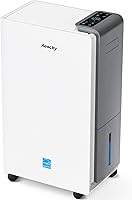
The AEOCKY 80 Pint 5,500 Sq Ft Dehumidifier is rated for up to 5,500 sq ft and removes up to 80 pints per day at 95°F and 95% relative humidity. It includes a drain hose and has adjustable humidity control.
Its capacity is 56 pints per day at 86°F and 80% relative humidity. Compare those rating conditions with your room before using its highest pint number as a sizing target.
The Midea 22 Pint Dehumidifier is rated for up to 1,500 sq ft and removes up to 22 pints per day. It has adjustable humidity settings, Wi-Fi control and a tank or hose drainage option.
It may suit a bedroom, office or basement when the space is within its stated range and dampness is moderate. For a very damp space or connected rooms, compare a higher-capacity model.
The KNKA 34 Pint Dehumidifier is rated for up to 2,500 sq ft and removes up to 34 pints per day at 95°F and 90% relative humidity. Its drainage options include a tank and an included hose.
Its stated pint capacity reflects warm, humid conditions. Consider the room’s actual temperature and dampness when comparing it with another model.
The Midea 50 Pint Dehumidifier is rated for up to 4,500 sq ft and removes up to 50 pints per day. It has Wi-Fi control, a tank and a hose connection for continuous drainage.
That capacity may fit a large basement or connected open area. Check the layout and humidity conditions before assuming one unit will control multiple closed rooms.
Do I need a hose drain for a larger unit?
A hose drain can make continuous operation easier when a unit runs often or sits where emptying a tank is inconvenient. It does not change the room’s capacity needs.
Check whether the model includes a hose or needs one bought separately. Also confirm that the hose can run to a suitable floor drain or other outlet with the required slope.
For setup details and trade-offs, see our guide to dehumidifiers with a hose drain. If you plan to empty the bucket by hand, check tank size and how often it may fill in your conditions.
How do I choose between two capacity bands?
Choose the lower band for mild, occasional dampness in a closed room, and the higher band when the room is persistently damp, taller than standard or connected to other areas. Consider whether a larger unit’s drainage and controls suit the location.
If both bands look plausible, make sure the smaller option’s stated coverage includes the room and leaves some headroom for damp days. Choose the larger option if the room often has condensation or an added moisture source.
Room sizing is only one part of the choice. Read how to lower humidity in your house for steps that reduce moisture entering the air.
What is the quick dehumidifier size rule?
Start with the chart’s room-area band, move up for very damp conditions or added moisture, and verify the model’s pint-rating conditions. Fix water intrusion separately and use a hygrometer to see whether humidity improves.
For a small, mildly damp room, compare models around 10–20 pints per day. For a large, persistently damp basement, consider 50 pints or more and address leaks or drainage problems alongside the appliance.
For a broad comparison by room, start with our best dehumidifiers for the home. If your main question is whether the room needs a unit at all, read how to tell if you need a dehumidifier.
Frequently asked questions
How many pints should a dehumidifier have for a 1,000 sq ft room?
For a 1,000 sq ft room, start around 20–30 pints per day if it is only slightly damp, and consider 30–40 pints if it feels very damp or has persistent musty odors. Treat this as a range, then account for high ceilings, a cool climate, open doors and ongoing moisture.
Is a 50 pint dehumidifier too big for a bedroom?
A 50 pint unit can be more capacity than a small bedroom needs when the room is only mildly damp, but it may make sense if the room connects to other damp areas or has a strong moisture source. Check the model’s controls, noise information and placement guidance for bedroom use.
Does a dehumidifier’s square foot rating tell me the right size?
A square foot rating is a useful comparison point, but it does not tell you how damp your room is or how much moisture enters each day. Compare the stated coverage with your room area, then choose more capacity for persistent dampness, connected spaces or a high ceiling.
Should I size up for a damp basement?
Consider a larger capacity for a damp basement, especially if it has a high ceiling, open connections or ongoing water entry. First address leaks and drainage problems, since a dehumidifier handles moisture in the air and does not repair the source of water.
What does pints per day mean on a dehumidifier?
Pints per day describes how much moisture a dehumidifier can remove under stated conditions. Ratings may use different temperature and humidity conditions, so two pint numbers are not always a direct comparison; check the conditions and model details before choosing.