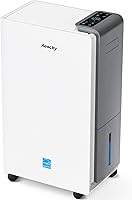
Best Dehumidifiers for the Home by Room
The best dehumidifier for home use depends on the room and its moisture load: choose a higher-capacity compressor model for a damp basement or large living area, a mid-size unit for a bedroom or bathroom, and a compact unit for a small enclosed space. Match the unit to the room, then plan how you'll drain it.
On this page (7 sections)
The best dehumidifier for home use depends on the room's size, dampness and drainage options. For a large basement, consider a higher-capacity unit; for bedrooms and mid-size rooms, compare portable compressor models; for a small enclosed space, a compact unit may be enough.
Room labels alone don't tell you what capacity to buy. Measure the space, note how damp it feels or measure humidity, then check the unit's stated coverage and pint rating.
This guide compares 4 picks for different home spaces and explains what to check before choosing. For a closer look at capacity, start with our dehumidifier size chart and pint ratings guide.
Which dehumidifier fits each room?
Match capacity to the damp area you want to control. A large basement may need a higher-capacity compressor model, while a smaller bedroom or bathroom may suit a lower-capacity portable unit.
These choices use the products' stated capacity and features to show where each one may fit. Coverage figures are stated by the brands and aren't a guarantee for every home layout or climate.
| Room or need | Pick to consider | Why it may fit |
|---|---|---|
| Large, damp basement or open area | AEOCKY 80 Pint 5,500 Sq Ft Dehumidifier | High stated capacity and coverage, with a drain hose included |
| Mid-size basement, laundry room or living area | KNKA 34 Pint Dehumidifier | 34-pint capacity, drain hose and selectable modes |
| Bedroom, office or smaller basement | Midea 22 Pint Dehumidifier | 22-pint capacity, Wi-Fi control and continuous drain connection |
| Small enclosed space with modest moisture | OWAAE 95 oz Dehumidifier | Compact form, sleep mode and automatic shutoff |
What makes a dehumidifier right for a home?
The right unit can remove enough moisture for its assigned area and work with your daily routine. Consider capacity, room access, drainage, noise and upkeep together.
How much capacity does a home dehumidifier need?
Capacity is the amount of water a unit can remove under stated conditions, while coverage is the brand's suggested area. Neither number alone predicts performance in every home, since temperature, humidity, room layout and airflow also affect results.
A basement with wet walls or a persistent water source needs attention beyond a portable appliance. Fix leaks or drainage problems first, then choose a unit for the remaining humidity load.
Compare pint ratings carefully because test conditions can differ. Our dehumidifier pint ratings guide explains why two labels with the same number may not be directly comparable.
Should you choose a compressor or a compact unit?
Compressor dehumidifiers are common choices for rooms where you need substantial moisture removal. The AEOCKY, KNKA and Midea picks here are compressor or portable compressor units with pint-per-day ratings.
Compact units can suit smaller enclosed spaces, but check their moisture-removal capacity before relying on one for a whole bedroom or a damp basement. The OWAAE is rated to remove 1 liter per day, so treat it as a small-space option rather than a match for the larger units above.
How should you handle drainage?
A water tank needs regular emptying, especially when a unit runs often. A hose connection can reduce that chore if you have a nearby drain and can route the hose safely.
Check whether the hose is included, what fittings are needed and whether gravity drainage requires a lower drain point. Keep the hose from kinking, and follow the manual's placement instructions.
For more choices built around continuous drainage, see our dehumidifiers with a drain hose guide.
What humidity setting should you use?
A hygrometer helps you see whether the room is staying damp and whether the unit's setting is working for your space. Use the manufacturer's instructions to set a comfortable target and avoid running the unit more than needed.
The good humidity level for a house guide explains how to think about indoor humidity across rooms and seasons. Keep windows and exterior doors closed while the unit runs if practical.
Which home dehumidifiers suit different rooms?
Pick a unit based on the room's scale and the features you'll use. We compared the stated capacity, coverage, drainage options and controls for each model.
AEOCKY 80 Pint: large basements and open areas
The AEOCKY is the strongest match here for a large damp area, with stated coverage of 5,500 sq ft and capacity up to 80 pints per day at 95°F and 95% relative humidity. Its included drain hose and adjustable humidity control may help if you expect frequent operation.
The AEOCKY has a 1.45-gallon tank. The tank is much smaller than its stated daily removal capacity, so a hose connection may be useful when moisture removal is high.
The AEOCKY has auto, constant humidity, continuous, smart drying and sleep modes. It also has automatic defrost and 3-year coverage.
Choose this model when the space is large and you have a practical drainage plan. For a more focused comparison of bigger basement choices, see best dehumidifiers for a large basement.
KNKA 34 Pint: mid-size rooms with flexible drainage
The KNKA suits a mid-size basement, laundry room or living area, with stated coverage of 2,500 sq ft and removal up to 34 pints per day at 95°F and 90% relative humidity. It includes a drain hose and offers a tank for manual emptying.
Its three modes support different routines: auto mode uses a default 50% relative humidity setting, dry mode is for faster clothes drying, and setting mode allows a 30% to 80% range. A washable filter and wheels are useful details if the unit will run regularly or need moving between rooms.
KNKA says sleep mode turns off the lights and lowers the sound level. If you want to use it overnight, consider where it will sit and whether the room's door will be open.
Choose it if you want a mid-size unit with several modes and a hose option. Compare against the best whole-house dehumidifiers if you need moisture control across multiple rooms.
Midea 22 Pint: bedrooms, offices and smaller basements
The Midea is a lower-capacity choice for a bedroom, office or smaller basement, with stated coverage of 1,500 sq ft and removal up to 22 pints per day. It offers Wi-Fi control through the SmartHome app and supports Alexa and Google Assistant voice commands.
The hose is not included, so plan to empty the tank or obtain a compatible hose for continuous drainage. The unit also has auto restart after a power interruption and auto defrost.
Midea describes this model as ENERGY STAR certified. Its stated 47 dBA operating sound level may be worth considering if you plan to use it near a bedroom or quiet workspace.
Choose it when app control matters and the room fits its stated capacity. If your priority is a smaller footprint, compare it with our best small dehumidifiers for tight spaces.
OWAAE 95 oz: small enclosed spaces
The OWAAE is a compact pick for a small enclosed space with modest moisture, such as a closet or bathroom. It has a 95 oz tank and a stated removal capacity of 1 liter per day.
The OWAAE has sleep mode and automatically shuts off when its tank is full or improperly positioned. Its sleep mode operates under 30 dB, according to OWAAE.
This capacity is far below the three compressor models in this guide. Don't rely on it for a large basement or a persistent moisture problem.
Choose it for a small area where portability and quiet operation matter more than high water removal. For broader small-room options, see our small dehumidifier guide.
How do you choose by room?
Start with the room's measured area, then adjust for how damp it is and how air moves through the home. A unit's coverage figure is a starting point, not a promise that it can handle separated rooms.
What works for a basement?
A basement often has more floor area and higher moisture exposure than an upstairs room, so compare higher-capacity models first. The AEOCKY and KNKA offer stated coverage of 5,500 and 2,500 sq ft, respectively.
Check for leaks, seepage, condensation or a wet floor before buying. A dehumidifier can manage airborne moisture, but it does not repair water entry or remove mold.
If a musty smell is your reason for shopping, read how to get rid of a musty smell in a basement to check for moisture sources and other causes.
What works for a bedroom?
For a bedroom, consider the unit's size, tank routine and sound. The Midea lists a 47 dBA operating level, while the OWAAE offers a sleep mode described as under 30 dB, but it has much lower water-removal capacity.
Place the unit where its airflow is unobstructed and where you can empty the tank or reach the drain. Keep cords and hoses out of walking paths.
What works for a bathroom or laundry area?
Bathrooms and laundry rooms can get short bursts of moisture from showers and drying clothes. A compressor model with a suitable stated capacity and a hose drain may be useful if the room stays damp after ventilation and source control.
Keep the unit away from splashes and follow its manual for placement. The KNKA includes a dry mode for clothes drying, but its manual should guide any use around laundry.
When does a whole-house unit make sense?
A whole-house dehumidifier may suit homes where multiple connected rooms need humidity control. It is a different installation choice from a portable unit, so compare ductwork, HVAC compatibility and installation needs before deciding.
A portable model may be simpler for one problem room. For multiple rooms with doors or separate floors, one portable unit may not reach each space effectively.
What should you check before buying?
Measure the room, confirm the drain plan and check operating conditions before you choose. These steps help avoid a unit that is too small, awkward to empty or difficult to place.
- Measure the room or connected area you want to control.
- Note dampness, condensation and any known leaks or water entry.
- Compare coverage and pint capacity, while checking the conditions used for those figures.
- Decide between manual tank emptying and continuous drainage.
- Check dimensions, weight, outlet location and the manual's clearance instructions.
- Consider sound and controls if the unit will run in a bedroom or shared room.
- Clean the filter as directed and keep the air path clear.
A unit that runs continuously may need a hose drain or frequent tank emptying. Set a reminder to check the tank until you understand how quickly it fills in your room.
Which dehumidifier should you choose for your home?
Choose the AEOCKY for a large, damp area where its stated capacity and hose drain suit your setup. Choose the Midea for a smaller area where app control is useful, or the KNKA for a mid-size room with mode choices.
Pick the OWAAE for a small enclosed space with modest moisture, not as a substitute for a higher-capacity unit. If you still need to estimate capacity, use the dehumidifier size chart before narrowing your options.
About these home dehumidifier picks
We compared stated capacity, coverage, drainage and controls against common room needs. Brand claims are identified as such, and room fit depends on conditions in your home.
Frequently asked questions
What size dehumidifier do I need for my home?
Choose a dehumidifier by the damp area it needs to serve, not your home's total square footage alone. Compare the room size with the unit's stated coverage and moisture-removal capacity, then account for how damp the space is, how often doors open and whether you can drain it continuously.
Should I use one dehumidifier for the whole house?
One portable dehumidifier may not control humidity well in rooms separated by closed doors, floors or long hallways. A whole-house unit connects to the home's HVAC system, while portable models are meant for areas they can reach; compare installation needs and coverage before choosing.
Is a small dehumidifier enough for a bedroom?
A compact dehumidifier can suit a small, enclosed bedroom with a modest moisture problem, but it may not remove enough water for a persistently damp room. Check its moisture-removal capacity and tank size, and consider nighttime noise and automatic shutoff.
Where should a dehumidifier go in a room?
Place a dehumidifier on a level surface with open space around its air intake and outlet, following the manual's clearances. Keep it away from walls, curtains and anything that could block airflow, and use a grounded outlet and drain setup approved for the unit.
Does a dehumidifier remove mold?
A dehumidifier removes moisture from air; it does not remove mold or fix the source of water. Repair leaks, dry wet materials promptly and follow appropriate mold cleanup guidance.
For extensive growth or recurring water damage, seek qualified help.