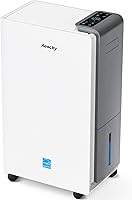
Midea Cube 20 Pint vs 35 Pint Dehumidifiers: Which Is Better? (October 2026)
Choose the Midea Cube 20 Pint for spaces up to 1,500 sq. ft. or the 35 Pint for spaces up to 3,500 sq. ft. Both have Wi-Fi, a drain hose and a lift-and-twist design. The 35 Pint has the larger bucket.
On this page (7 sections)
The Midea Cube 20 Pint suits spaces up to 1,500 sq. ft., while the 35 Pint is rated for spaces up to 3,500 sq. ft. Both have Wi-Fi, a drain hose and a lift-and-twist design.
The 35 Pint also has a larger bucket.
The 20 Pint is rated to collect 20 pints per day, while the 35 Pint is rated for 35 pints per day.
Midea describes the 20 Pint as similar to 30 pints under the 2012 DOE rating, and the 35 Pint as similar to 50 pints under that rating. Compare those stated figures and coverage when choosing between these models.


Midea Cube 20 Pint vs 35 Pint: which should you choose?
Pick the 20 Pint for a space within its stated 1,500 sq. ft. coverage. Choose the 35 Pint for its stated 3,500 sq. ft. coverage and higher daily water removal.
Its bucket holds 4.2 gallons, compared with 3.2 gallons for the 20 Pint.
Both Cubes offer Wi-Fi control through the SmartHome app, voice commands through Alexa or Google Assistant, a drain hose and a washable filter. Their lift-and-twist design can be nested for storage or extended for use.
Choose based on your space and drainage routine. A larger capacity may suit a bigger damp area, but room size and drainage access also matter.
What changes between the two Cube sizes?
The 35 Pint has more stated coverage, higher daily capacity and a larger bucket. The 20 Pint is slightly smaller in its stated dimensions.
| Feature | Midea Cube 20 Pint | Midea Cube 35 Pint |
|---|---|---|
| Daily water removal | 20 pints | 35 pints |
| Stated coverage | 1,500 sq. ft. | 3,500 sq. ft. |
| Bucket | 3.2 gallons | 4.2 gallons |
| Dimensions | 13.5 x 13.5 x 13.54 in | 14.45 x 14.76 x 14.96 in |
| Weight | 33.3 lb | 39.6 lb |
| Drain hose | Included | Included |
| Wi-Fi control | Yes | Yes |
| Nested storage form | Yes | Yes |
Dimensions are listed in depth, width and height order. Check the route into the room and the intended operating spot, including room for the hose and access to the tank.
Midea Cube 20 Pint vs 35 Pint capacity
The 35 Pint has the higher water-removal rating and coverage for a larger space. The 20 Pint may suit a room within 1,500 sq. ft., depending on its moisture load and your drainage setup.
Midea describes the 20 Pint Cube as similar to a 30-pint 2012 DOE rating, and the 35 Pint as similar to a 50-pint 2012 DOE rating.
If you want to understand why dehumidifier pint labels can differ, read our guide to dehumidifier pint ratings. For room sizing, use our dehumidifier size chart as a starting point, then consider how damp the space is and how you will drain the unit.
Which Cube has the easier bucket routine?
The 35 Pint has the larger bucket, at 4.2 gallons compared with 3.2 gallons for the 20 Pint. How often you'll empty either model depends on how much moisture it collects.
Both Cubes include a drain hose and support continuous drainage. Midea says you can position the 20 Pint above a sink with its tank removed or over a floor drain.
Plan for a suitable drain location and hose route before setup.
The standard Midea 22 Pint Dehumidifier is another option if moving a unit between rooms matters. It has four wheels, a 0.8-gallon bucket and a continuous drain connection for a standard hose, which is not included.
When is continuous drainage useful?
Continuous drainage can reduce the need to empty a bucket by hand when the unit can sit near a suitable drain. The hose needs a practical route, and the unit needs a stable position that works with its drainage setup.
If there is no nearby floor drain, sink or suitable hose route, the bucket may be more practical. Compare bucket size and how easily you can reach it to empty it.
Will either Cube fit your room and storage space?
The 20 Pint is smaller and weighs 6.3 lb less than the 35 Pint. Measure the intended spot and the path into it before choosing.
The 20 Pint measures 13.5 in deep, 13.5 in wide and 13.54 in high. The 35 Pint measures 14.45 in deep, 14.76 in wide and 14.96 in high.
Both models can be nested for more compact storage when the space is dry. If you expect to put the unit away between damp periods, check where it will fit in nested form and how you'll move it there.
Allow room to reach the controls, handle the bucket or hose, and follow the setup instructions for the model you choose.
Which Cube features are shared?
Both models offer Wi-Fi, voice control, a drain hose and a washable filter. They also share the lift-and-twist design, which can be nested for storage or extended for operation.
The 20 Pint has auto restart and auto defrost. The 35 Pint has smart control, continuous drainage, a removable tank and automatic shutoff.
Both models have two speeds. The decision centers on capacity, coverage, bucket size and the dimensions that fit your room.
If control from a phone is a priority, see our guide to smart dehumidifiers with Wi-Fi. For a broader look at choices from known brands, browse portable dehumidifiers from established brands.
How does the Cube compare with the Midea 22 Pint?
The 22 Pint is a wheeled option for spaces up to 1,500 sq. ft.; the Cube 20 Pint has a larger bucket and nested storage form. Both models have Wi-Fi and are rated to remove a similar amount of water per day.
The standard 22 Pint has four wheels and a 0.8-gallon bucket. For continuous drainage, it connects to a standard hose that isn't included.
The Cube 20 Pint includes a drain hose and has a 3.2-gallon bucket. Consider the standard model if moving it between rooms matters more than bucket capacity or nested storage.
Choose the Cube if those features suit your space.
Which Midea Cube should you buy?
Choose the 20 Pint for a space within 1,500 sq. ft. when its capacity and 3.2-gallon bucket fit your needs. Choose the 35 Pint for its higher daily capacity, 3,500 sq. ft. stated coverage and 4.2-gallon bucket.
Measure your space and consider how you'll drain the unit before deciding. If you're unsure what room coverage means for your home, start with our guide to choosing a dehumidifier by room size.
The Midea Cube 20 Pint review covers that model on its own. Our brand picks and reviews hub has more Midea comparisons and product guides.
Our score weighs specs, features and buyer feedback against what you're shopping for.
Frequently asked questions
Is the Midea Cube 20 Pint enough for a basement?
It may suit a basement within its stated 1,500 sq. ft. coverage, but room area alone doesn't determine the right capacity. Consider how damp the space is, how often you want to empty a bucket and whether you can use the included hose for continuous drainage.
What is the main difference between the Midea Cube 20 Pint and 35 Pint?
The 35 Pint is rated to collect more water each day, covers a larger stated area and has a larger bucket. The 20 Pint covers up to 1,500 sq. ft. with a 3.2-gallon bucket, while the 35 Pint covers up to 3,500 sq. ft. with a 4.2-gallon bucket.
Do the Midea Cube 20 Pint and 35 Pint use the same hose setup?
Both include a drain hose and offer a continuous drain option. The 20 Pint can sit above a sink with its tank removed or be positioned over a floor drain; the 35 Pint also supports continuous draining.
Plan the hose route and drain location before choosing a spot.
Can you store the Midea Cube when the room is dry?
Both Cube models have a nested form intended for more compact storage when the space is dry. Their lift-and-twist design also lets you extend the unit for operation.
Check the clearance and storage space where you plan to keep the model you choose.
Is the Midea 22 Pint the same as the Cube 20 Pint?
No. The standard Midea 22 Pint is a separate design with four wheels and a 0.8-gallon bucket, while the Cube 20 Pint has a 3.2-gallon bucket and nested storage form.
Both are stated for 1,500 sq. ft., and their drainage setups differ.