Dehumidifier Pint Ratings Explained
A dehumidifier pint rating tells you how much moisture a unit is rated to remove in 24 hours under stated conditions. Compare the rating basis with your room’s size, dampness and drainage needs before choosing a unit.
On this page (11 sections)
- What does a dehumidifier pint rating measure?
- Why do dehumidifier pint ratings differ?
- How should you compare dehumidifier pint ratings?
- Does the room-size claim match the pint rating?
- What do 20, 34 and 80 pints look like in product examples?
- Which product suits your room and routine?
- Is a higher pint rating always the right choice?
- How do you set up a dehumidifier for useful results?
- What care helps a dehumidifier keep working?
- What mistakes make pint ratings harder to use?
- How do you choose the right dehumidifier pint rating for your home?
A dehumidifier pint rating tells you how much moisture a unit is rated to remove in 24 hours under stated test conditions. To choose well, compare the conditions behind the rating, your room’s size and dampness, and how you’ll drain the collected water.
The pint number is a capacity measure, not a tank-size label or a promise about daily collection in your home. A 20-pint rating measured under one method may not compare directly with a 20-pint rating measured another way.
What does a dehumidifier pint rating measure?
A pint rating measures rated moisture removal over 24 hours under a defined set of conditions. It tells you about the unit’s capacity, not how much water its bucket holds.
Actual collection changes with the air temperature, relative humidity, airflow and moisture entering the room. A damp basement with wet walls may keep a unit working harder than a dry bedroom of the same size.
The rating is useful when you compare products that use the same test basis. It gives you a common capacity measure, while room coverage and drainage features help answer different buying questions.
Why do dehumidifier pint ratings differ?
Dehumidifier pint ratings differ because test conditions and rating standards can differ. Warm, humid air contains more moisture for a unit to collect than cool, relatively dry air.
Midea describes its Cube as a 20-pint unit and says that capacity is similar to 30 pints under the 2012 DOE method. This is a useful example of why two capacity labels may describe results under different methods.
When the rating basis is unclear, avoid treating two figures as a direct ranking. Use stated coverage as another guide, and compare the room’s dampness, layout and drainage needs.
The dehumidifier size chart helps connect capacity ranges with common room areas.
Which conditions affect a pint rating?
Temperature and relative humidity affect how much water a dehumidifier can collect. Higher humidity gives the unit more moisture to remove, while cooler air can change how a compressor model operates.
A figure measured at 95°F and 90% relative humidity gives context for the Waykar 34-pint and both 80-pint examples. It does not necessarily compare directly with a rating measured under different conditions.
The rating also does not say how long the tank will last before it fills. Tank volume, the room’s moisture load and continuous drainage determine how often you need to empty or check the unit.
How should you compare dehumidifier pint ratings?
Compare the test basis first, then check whether the unit fits your room and routine. If two ratings use different methods, keep them separate instead of choosing whichever number looks larger.
Use this checklist:
- Find each model’s rated pints per day.
- Check whether the temperature, humidity or test method is stated.
- Compare figures measured on the same basis where possible.
- Compare stated room coverage with your room’s area and dampness.
- Check tank volume, hose options, controls and placement needs.
For example, the 34-pint Waykar and both 80-pint models state capacity at 95°F and 90% relative humidity. That gives you a shared basis for those capacity figures, though the room conditions in your home will differ.
Think about convenience alongside capacity. A modest tank can mean regular emptying during a humid spell, while a hose can send water to a suitable drain if gravity and placement allow.
For an overall room-by-room starting point, see our guide to best dehumidifiers for the home. If you’re managing a broad basement area, compare the options in our large basement dehumidifier guide.
Does the room-size claim match the pint rating?
Room coverage and pint capacity answer different questions. Pints describe rated removal under test conditions, while a square-foot figure is a guide to the area a model is intended to serve.
Two rooms with the same floor area can have different moisture loads. A basement with ongoing dampness, a laundry room during frequent drying, and a bedroom with occasional condensation may need different run times and capacity.
Use coverage as a first filter, not a guarantee that one unit suits every room of that size. Also consider ceiling height, open doorways, air movement and whether moisture sources can be reduced.
A unit should have clear space around its air intake and outlet. If furniture or stored boxes block airflow, the room may not dry evenly even when the capacity and coverage look suitable on paper.
The 70-pint dehumidifier options can help if your room calls for more capacity than a mid-size model. For smaller spaces, compare the area and dampness against models in our small dehumidifier guide.
What do 20, 34 and 80 pints look like in product examples?
These examples show how capacity, coverage and drainage features work together. Their intended uses differ, so pick based on the room and routine rather than the pint figure alone.
The Midea Cube is rated at 20 pints per day and has stated coverage of 1,500 sq ft. Its extendable, nested design supports compact storage, and it includes a hose for continuous draining; Wi-Fi controls add a remote option for buyers who want app access.
Midea also describes its 20-pint capacity as similar to 30 pints under the 2012 DOE method. That makes it a useful reminder to check the rating method when comparing this unit with products labeled under another basis.
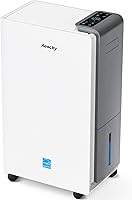
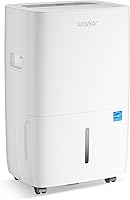
The Waykar 34 Pint 2025 Dehumidifier is rated for up to 34 pints per day at 95°F and 90% relative humidity, with stated coverage up to 2,000 sq ft. Its 0.62-gallon tank is small, so a drain hose is practical if the unit will run for long periods.
The Yaufey 80 Pint model is rated for up to 80 pints per day at 95°F and 90% relative humidity, with stated coverage up to 5,500 sq ft. It has a 1.06-gallon tank and includes a hose, giving buyers a manual or continuous-drain option.
The Waykar 80 Pint model also states up to 80 pints per day at 95°F and 90% relative humidity, with coverage up to 5,000 sq ft. Its 1.14-gallon tank, hose support and 90-degree auto-swing airflow suit a large room where spread across the space matters.
The two 80-pint models share a capacity rating basis, while their coverage figures and features differ. Choose the Yaufey when its broader stated coverage fits the area, or the Waykar when its swinging airflow feature better suits the room layout.
Which product suits your room and routine?
The right product depends on how much area you need to manage and how often you want to handle water. Consider the following fit notes as practical starting points.
The Midea Cube suits a basement, bedroom, bathroom or crawlspace within its stated coverage when you value app control, a larger bucket and a form that nests for storage. Skip it if you need the highest rated capacity for a persistently wet large area.
The Waykar 34 Pint is a fit for a home area where the 34-pint rating and stated coverage are appropriate, and a hose can be routed to a drain. Skip it if you expect to rely on the tank for long unattended runs, because its 0.62-gallon capacity calls for more frequent checks.
The Yaufey 80 Pint suits a large, damp area where its stated coverage and continuous drainage option fit the setup. Skip a high-capacity model if your room is small and only mildly humid, or if you cannot leave enough open space around the unit.
The Waykar 80 Pint suits a large room where the stated 5,000 sq ft coverage and auto-swing airflow help match the layout. Skip it if its capacity is more than your space needs or if you cannot route a hose and do not want to monitor the tank.
Is a higher pint rating always the right choice?
A higher rating is not automatically a better fit. It indicates greater removal capacity under its test conditions, but it may be more capacity than a small or mildly damp room needs.
Start with room area and moisture sources. Then check the product’s stated coverage, the conditions behind its capacity number, whether the unit fits your floor plan, and how you’ll remove water.
For an especially damp or large area, compare high-capacity models and their continuous-drain options. For light moisture in a small room, a compact model may be easier to place and manage.
If you are deciding between a portable unit and broader home coverage, read about whole-house dehumidifiers. If the dampness is limited to occasional odor or a small enclosed space, our comparison of a [dehumidifier vs.
DampRid](/dehumidifier-vs-damprid/) explains when a moisture absorber may be enough.
How do you set up a dehumidifier for useful results?
Set up the dehumidifier in the damp area with open space around its air intake and outlet. Keep it on a stable, level floor, away from walls, curtains and stored items that could block airflow.
Close windows and exterior doors while the unit runs, unless you need ventilation to address a separate source of moisture. Running a dehumidifier with humid outdoor air constantly entering can make it work longer without solving the underlying cause.
Choose a target humidity that feels comfortable and helps limit dampness. Many home users aim for a moderate indoor humidity level rather than trying to make the air as dry as possible; see our guide to a good humidity level for a house.
For continuous draining, place the unit where the hose can slope downward toward a floor drain or other suitable outlet. Avoid kinks, upward loops or a hose end sitting in standing water, since these can slow or stop gravity drainage.
If you use the bucket, make sure it is seated correctly and check it regularly. Tank-full shutoff helps prevent overflow, but it also stops moisture removal until you empty and reinstall the bucket.
What care helps a dehumidifier keep working?
Basic care means keeping the filter clean, the airflow clear and the drain path open. Follow the instructions for the model, since filter access and cleaning steps can vary.
Washable filters should be cleaned on the schedule in the manual and fully dried before they go back in. Dust on the filter or blocked vents can reduce airflow and make the unit less effective in the room.
Inspect the hose and connection periodically for kinks, dirt or leaks. If you use the tank, empty it before moving the unit and wipe away any moisture around the bucket area.
When the damp season ends, clean and dry the unit before storing it. A nested design, such as the Midea Cube’s, can help with compact storage after the space is dry.
What mistakes make pint ratings harder to use?
The most common mistake is comparing capacity numbers without checking their test conditions. A larger number can look decisive while describing a different measurement basis.
Other buying and setup mistakes include:
- Treating the pint rating as the bucket size.
- Assuming square-foot coverage guarantees performance in a very damp room.
- Buying more capacity without checking the unit’s footprint and airflow clearance.
- Relying on a small tank for long, unattended operation.
- Connecting a drain hose without a downward slope.
- Running the unit while open windows keep bringing in humid air.
- Ignoring an active leak or other source of moisture.
A dehumidifier manages moisture in the air, but it cannot repair plumbing leaks, roof leaks or water entering through walls. Address persistent moisture sources as well as choosing a suitable capacity.
How do you choose the right dehumidifier pint rating for your home?
Choose a dehumidifier pint rating by matching the rating basis, room conditions and drainage plan. Use the capacity figure to compare removal potential, then check stated coverage and the effort needed to operate the unit.
For a moderate residential room where compact storage and app control matter, consider the Midea Cube. For a mid-size space, the Waykar 34 Pint is an option if its small tank and hose setup fit your routine.
For a large, persistently damp area, compare the Yaufey and Waykar 80-pint models by stated coverage, room layout and drainage features. Use the dehumidifier size chart to narrow the capacity range before weighing those details.
Frequently asked questions
What does a dehumidifier pint rating mean?
A pint rating describes how many pints of water a dehumidifier is rated to remove in 24 hours under specified conditions. It measures moisture-removal capacity, not tank size or a guaranteed daily amount in every home.
Room temperature, humidity, airflow and the test method all affect actual collection.
Why are dehumidifier pint ratings not comparable?
Pint ratings may use different test methods, temperatures or relative humidity levels. A higher figure does not automatically mean one unit removes more water than another in your room.
Compare ratings on a shared basis where possible, and use coverage, drainage and room conditions to make the final choice.
Is a higher pint rating always better?
A higher pint rating means greater rated moisture removal under the stated test conditions, but that capacity may exceed what a small or mildly damp room needs. Match the unit to the area and moisture load, then check its drainage and placement needs.
Room coverage helps narrow the options but is not the same measure as pints per day.
What is the difference between 20 pint and 30 pint ratings?
The numbers indicate different rated removal amounts, but compare them directly only when the figures use the same test basis. Midea describes its Cube’s 20-pint capacity as similar to 30 pints under the 2012 DOE method.
That example shows why the method behind a number matters as much as the number itself.
How do I choose a dehumidifier pint rating?
Start with your room’s area, how damp it is and whether moisture comes from a steady source. Then compare capacity figures measured under similar conditions, check stated room coverage and decide whether you can drain continuously.
Use the dehumidifier size chart to narrow the range for common room sizes.