Dehumidifier vs Heater for Drying Clothes: Which Is Better? (November 2026)
A dehumidifier wins for drying clothes in a closed room, because it pulls moisture out of the air so the wash can finish drying without leaving the room damp. A heater only warms the air, so it speeds drying in an open, ventilated space but leaves the water vapor behind.
On this page (9 sections)
- Which one dries clothes faster?
- The two options side by side
- The point that decides it: closed room or open space
- How each one handles the moisture
- Which one is easier to set up and run?
- Which handles a whole wash load?
- Which one costs less to run?
- Who should buy which?
- The verdict: dehumidifier vs heater for drying clothes
A dehumidifier wins for drying clothes in a closed room, because it pulls moisture out of the air so the wash can finish drying without leaving the room damp. A heater only warms the air, so it speeds drying in an open, ventilated space but leaves the water vapor behind.
That's the short answer to the dehumidifier vs heater for drying clothes question. The longer answer depends on your room, your load size and how much you want to spend on running costs.
This comparison looks at what each machine actually does to a wet wash, where each one works best and who should buy which. It uses two real options from our product list: a dehumidifier and a warm-air heater.
Which one dries clothes faster?
In a closed room, a dehumidifier dries clothes faster than a heater alone. A heater warms the air so it can hold more moisture, but that moisture has nowhere to go in a sealed space.
Here's why that matters. Warm air holds more water vapor, so a heater helps a wash give up water faster.
But in a closed room the air quickly becomes saturated and the fabric slows down again.
A dehumidifier changes the equation. It pulls water out of the air and collects it in a tank, so the room stays dry and keeps accepting moisture from the wash.
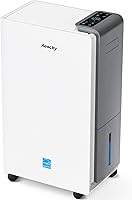
The ToLife Dehumidifier does this in rooms up to 1000 sq ft. It uses semi-conductor condensation to pull moisture out and keep humidity below 45%.
The Lehui Portable Blanket Heater works differently. Its 500W warm-air output reaches about 149 F at the high setting, but it only heats and moves air.
It doesn't remove the water.
The two options side by side
The dehumidifier removes moisture, while the heater only warms the air. That single difference drives almost every choice between them for a laundry load.


The point that decides it: closed room or open space
Pick the dehumidifier for a closed room; pick the heater only where you have real ventilation. This is the first question to ask, because it changes which machine actually finishes the job.
A dehumidifier is designed to work with doors and windows shut. ToLife's own guidance notes that it needs doors and windows closed to do its job.
In a sealed room, the machine keeps pulling moisture from the wash and the air stays dry.
A heater needs air movement. Warm air only dries fabric if the humid air it picks up can leave the room.
In an open or well-ventilated space, a heater warms the wash and moves the moisture out through the window or door.
In a closed room, a heater leaves the water vapor inside. The room gets warm and stuffy, the wash slows down and the air feels damp.
That's the classic setup for musty smells and condensation on windows.
So the honest split is this: a dehumidifier for a spare room or a sealed utility space, and a heater for a garage or a room you can air out. Most homes dry clothes indoors, so most readers want the dehumidifier.
How each one handles the moisture
The dehumidifier collects water; the heater leaves water vapor in the air. The tank size and moisture pull tell you how much each can do.
The ToLife Dehumidifier has a 95 oz tank. Its auto shutoff stops the unit when the tank fills or sits wrong, so water can't overflow onto the floor.
That's a real safety feature for a room where you leave a wash drying.
Its moisture pull is 1 liter per day. In a typical spare room, that's enough to keep the air moving in the right direction while a load dries.
It also runs a sleep mode under 30 dB, which is quiet enough for a bedroom or nursery nearby.
The Eva-Dry Wireless Mini Dehumidifier takes a different approach. It's a cordless silica gel absorber with a 6 oz capacity, and its beads change from orange to green when it's time to recharge.
It pulls 0.38 pints per day and covers up to 333 sq ft.
That's a small pull. It's suited to a closet, a cabinet or a car, not a full laundry room.
Think of it as a helper for the small spots where wet items hang.
The Lehui Portable Blanket Heater adds no moisture control at all. It warms air to about 104 to 149 F and sends it through a dual nozzle.
The moisture it lifts stays in the room.
Which one is easier to set up and run?
Both are simple to set up, but the dehumidifier needs its tank emptied and the heater needs a clear spot to warm a few items. Check the footprint and the power draw before you choose a spot.
The ToLife unit measures about 8.27 by 5.55 by 13.78 inches. It's compact enough for a bathroom or a closet corner.
It has handles, so you can move it between rooms.
It also has seven color options for its ambient lighting. You can lock a color and use it as a night light.
That's a nice extra in a spare room, though it doesn't affect drying.
The Lehui heater measures 11.77 by 6.22 by 6.1 inches and weighs about 3.31 lb. It has four temperature settings and nine timer increments from 5 to 180 minutes.
The built-in thermal fuse guards against overheating.
The timer is the useful part for spot drying. Set it and walk away, and the heater shuts off on its own.
A wash load in a whole room needs more than one warm nozzle though.
Both the dehumidifier and the heater need an outlet. The Eva-Dry mini is the exception.
It's cordless, so it works in a closet with no power nearby, and it only needs a recharge every 20 to 30 days.
Which handles a whole wash load?
The dehumidifier handles a whole load; the heater suits small items and spot drying. Match the machine to what's actually wet.
A typical load of towels or jeans holds a lot of water. Getting that out takes a steady pull on the room's moisture.
The ToLife unit's 1 liter per day and 95 oz tank are built for that kind of job in a closed room.
A 500W heater is a small heat source. Its warm air helps a pair of shoes, a blanket or a few garments dry faster.
For a whole load, the warm air it puts out is spread across a room and does less work per item.
That's why the badge split matters. The Lehui heater is best for spot drying shoes and small items.
It's not a whole-laundry solution.
The Eva-Dry mini is best for closets and cupboards. A damp coat or a few shirts hanging in a small space fit its 6 oz capacity.
A full wash load does not.
If you want a bigger dehumidifier for a whole basement laundry area, our Midea 50 pint dehumidifier review looks at a unit built for large rooms. It's a different class of machine from the mini models here.
Which one costs less to run?
The dehumidifier usually costs less to run for drying clothes than a space heater. A heater trades warmth for a steady draw of power, while a dehumidifier removes the moisture that's causing the problem.
The Lehui heater runs at 500W. That's modest for a heater, but it's still a heating element running for as long as the timer allows.
If you set 180 minutes, that's three hours of heating for a small drying job.
The ToLife dehumidifier runs a condensation process instead of a heating element. Its draw is lighter, and it only needs to run while the room is closed and the wash is wet.
A smaller pull over the same time usually adds up to less.
Exact running costs depend on your unit's wattage and your local electricity rate. Compare both before you choose, especially if you dry clothes indoors several times a week.
The Eva-Dry mini is the lowest-cost option to run in one sense: it's cordless and recharges every few weeks. Its trade-off is a small moisture pull.
It's cheap to run but not built for a full load.
Who should buy which?
Buy a dehumidifier if you dry clothes indoors in a closed room, and the heater if you have a ventilated space or small items to dry. The decision rule is simple: match the machine to your room.
Pick the ToLife Dehumidifier if you dry clothes in a spare room or bathroom
The ToLife Dehumidifier is the right pick for most readers who dry a wash indoors. It's built for a closed room up to 1000 sq ft.
It pulls moisture from the air, runs quiet in sleep mode and shuts off when its tank fills. That's the setup that actually finishes drying a load without leaving the room damp.
If you'd rather compare a couple of portable units first, our AEOCKY vs Waykar dehumidifier comparison weighs two similar options. Both are built for small to medium rooms.
Pick the Lehui Portable Blanket Heater if you have open air and small items
The Lehui Portable Blanket Heater suits a garage or a well-ventilated space where warm air can carry moisture away. Its timer and temperature settings make spot drying easy.
It's also the better pick for shoes, bedding and blankets, where a warm-air nozzle does more work than a room-wide moisture pull. If your drying space has real airflow, a heater is the simpler tool.
For a compact unit that moves between small rooms, a portable dehumidifier like the Eva-Dry mini is the best fit. It's the closet and cupboard option.
Pick the Eva-Dry Wireless Mini Dehumidifier for closets and cupboards
The Eva-Dry Wireless Mini Dehumidifier is the smallest option here. Its score reflects how well it fits the small spots where a wash load or a wet coat hangs, not a whole room.
It's cordless, needs no outlet and recharges every 20 to 30 days. For a closet, a cabinet or a car, that's the simplest way to keep the air dry.
If your main goal is drying a full laundry load in a closed room, the ToLife unit is the better fit. The Eva-Dry mini is a helper for small spaces, not a room dryer.
The verdict: dehumidifier vs heater for drying clothes
For most homes, a dehumidifier is the better choice for drying clothes indoors, because it removes the moisture instead of just warming the air. A heater only wins when you have real ventilation or a few small items to dry.
Here's the decision rule in one line. Pick the dehumidifier for a closed room, a spare bedroom or a bathroom where you hang a whole load.
Pick the heater for a garage, a ventilated space or spot drying shoes and bedding.
The dehumidifier vs heater for drying clothes choice really comes down to what happens to the water. A dehumidifier takes it out.
A heater leaves it in the air.
If you dry clothes indoors most weeks, the ToLife Dehumidifier is the pick. Its closed-room design, quiet sleep mode and auto shutoff fit the way most homes dry a wash.
If your drying space already has airflow and you only need to dry a few small items, the Lehui heater is the simpler tool. For a closet or cupboard, the cordless Eva-Dry mini rounds out the options.
Our score weighs specs, features and buyer feedback against what you're shopping for. Before you buy, measure your drying room and check the power outlet, then match the machine to the space.
Frequently asked questions
Does a dehumidifier dry clothes faster than a heater?
In a closed room, a dehumidifier dries clothes faster than a heater alone, because the air stays dry and keeps taking up moisture from the fabric. A heater only warms the air, so in a sealed room the humidity climbs and the wash slows down.
Can I run a heater and a dehumidifier together to dry clothes?
Yes, and that pairing often works well. The heater warms the air so it holds more moisture, and the dehumidifier pulls that moisture back out.
Keep both in the same closed room and watch the dehumidifier's tank.
Do I need to leave a window open when drying clothes with a dehumidifier?
No. A dehumidifier works best with doors and windows shut so it can pull the room's moisture down.
Opening a window lets humid outside air back in and makes the unit work harder for the same result.
Is a dehumidifier safe to leave running while clothes dry overnight?
Run it during the day if you can keep an eye on it, or use a model with auto shutoff so the tank can't overflow. The ToLife unit stops when its tank is full and also stops after 48 hours of running.
Which is cheaper to run for drying clothes, a dehumidifier or a heater?
A dehumidifier usually costs less to run than a space heater for the same drying job, because a heater trades warmth for a steady draw of power. Exact running costs depend on your unit's wattage and your electricity rate, so check both before you choose.
Will a heater alone stop clothes smelling musty?
Not reliably. Heat dries fabric faster, but the moisture stays in the room, so a stuffy space can leave a damp smell behind.
Pulling the moisture out with a dehumidifier addresses the cause, and fresh air helps too.