Compressor vs Desiccant Dehumidifier: Which Is Better? (October 2026)
Choose a compressor dehumidifier for a warm room with a heavier moisture load; choose a desiccant model for a cool room where compressor units can frost and pause. Compare the room’s winter temperature, unit capacity and drainage needs before you decide.
On this page (8 sections)
- How does a compressor vs desiccant dehumidifier work?
- Which type works better in a cold room?
- Which type removes more moisture?
- Which type is quieter and easier to place?
- Which type uses less electricity?
- How should you set up and care for either type?
- What mistakes should you avoid?
- Which dehumidifier type should you choose?
Choose a compressor dehumidifier for a warm, damp room with a heavier moisture load; choose a desiccant model for a cold room where compressors can frost and pause. In a compressor vs desiccant dehumidifier comparison, the room’s coldest temperatures, moisture load and drainage needs are the most useful decision points.
A compressor unit cools air so water vapor condenses and collects. A desiccant unit absorbs moisture into a drying material, then uses heat to release it for collection.
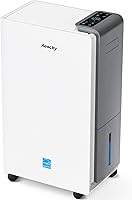
The Midea 22 Pint Dehumidifier is a compressor option for warmer spaces. The AEOCKY and Eva-Dry use desiccant technology for situations where colder operating conditions, quieter operation or easier movement matter.


How does a compressor vs desiccant dehumidifier work?
A compressor removes moisture by cooling air; a desiccant model captures water vapor in a drying material and releases it with heat. That difference affects how each type handles cold temperatures and the space around it.
A compressor pulls room air across a cold coil. Water condenses on the coil and drains into a tank or through a hose, while the unit returns drier air to the room.
A desiccant model draws water vapor into a material such as a zeolite molecular sieve. Heat releases the collected moisture, which then drains or collects in a reservoir.
Both types lower moisture, but they suit different room conditions. See how a dehumidifier works for a closer look at the basic process.
Which type works better in a cold room?
A desiccant model is usually the better fit for a chilly room because it does not depend on a cold coil that can frost over. A compressor dehumidifier can lose efficiency as the room cools and may pause to defrost.
That makes the room’s winter temperature a key part of the choice. A warm, damp basement can suit a compressor, while an unheated crawl space or garage may need a model rated for lower temperatures.
The AEOCKY X1-Pro has an optimal operating range of 34°F to 95°F. The Eva-Dry EDV-4000H is cold-rated to 34°F, though collected water can freeze below that temperature.
Use the coldest temperature the room reaches, not just the temperature on the day you shop. If the space changes a lot by season, track its temperature and compare it with the unit’s stated range.
Is a desiccant dehumidifier right for every basement?
No, because temperature, room size and moisture load all matter. A compact, cold basement is a different job from a large, persistently damp one.
Check the unit’s stated coverage and capacity, then plan how you’ll empty it or drain it. For a larger space, see our guide to dehumidifiers for large basements.
Which type removes more moisture?
Compare the daily capacity of the exact models you’re considering; the type alone does not determine how much water a unit removes. Capacity figures depend on conditions, so a rating may not predict the same performance in a cool room.
The Midea is rated for up to 22 pints per day. The AEOCKY is rated for 10 pints per day, and the Eva-Dry is rated for up to 14.81 pints per day.
Those numbers are not a direct performance ranking across different models and conditions. Temperature, humidity, airflow and runtime affect how much moisture a unit collects.
Start with the room’s size and dampness, then use the dehumidifier size chart to narrow down capacity. Our guide to dehumidifier pint ratings explains why ratings from different units may not be directly comparable.
For a high moisture load in a warm room, consider a compressor model with a capacity suited to the space. A compact desiccant unit can fit a cold utility area, but its stated capacity and coverage still need to match the job.
Which type is quieter and easier to place?
Desiccant models can suit rooms where compressor vibration and cycling noise are a concern, but their heat output can make a small space feel warmer. Check each unit’s noise and placement details instead of assuming all models sound or feel the same.
The AEOCKY X1-Pro has a sleep mode and weighs 8.8 lb. AEOCKY advises moving it farther away if its warmth is noticeable.
The Eva-Dry EDV-4000H weighs 13 lb and is 7 inches deep. That compact footprint can help when it needs to fit through a crawl space opening or move between nearby spaces.
The Midea has a stated noise level of 47 dBA, wheels and handles. At 33.5 lb, it can be rolled around a home, but carrying it into a tight service space is less convenient.
Think about the route to the room as well as the spot where the unit will sit. Measure a crawl space opening, leave room to reach the controls, and make sure a tank can be removed without moving heavy items.
Which type uses less electricity?
Energy use depends on the exact model and how long it runs, so the technology label alone does not identify the lower-use option. Compare wattage and published energy guidance, then consider the room’s moisture load.
The AEOCKY is rated at 340 watts. The Midea is ENERGY STAR certified, and Midea says it saves 31% energy compared with traditional dehumidifiers.
These figures do not provide a direct annual energy comparison between the 2 units. Runtime and room conditions affect total consumption, so estimate use with the exact model’s wattage and your local electricity rate.
See how much electricity a dehumidifier uses for a practical way to estimate operating cost.
How should you set up and care for either type?
Place the dehumidifier where air can move freely, set a sensible humidity target and choose a drainage plan before you leave it running. Good placement and regular care make either type easier to use.
Keep the air intake and outlet clear. Avoid pushing a unit against a wall or hiding it behind stored items, since blocked airflow can make it harder to circulate air through the room.
For a compressor model, consider where condensate will go. The Midea can collect water in its tank or connect to a standard hose, which is not included; route a hose to a suitable drain and make sure it slopes down without kinks.
For a desiccant model, check the tank or continuous-drain setup before use. The AEOCKY includes a drain hose and has an 85 oz tank, while the Eva-Dry has a 2 L tank with automatic shutoff and a drain option.
Empty the tank before it reaches capacity, and clean the reusable air filter according to the manual. Check the drain hose and intake periodically for lint, dust or blockages, especially in a laundry area or crawl space.
Use a humidity setting that fits the room rather than running the unit at its maximum setting all the time. A hygrometer can help you see whether the space is improving and whether the unit needs to run continuously.
What mistakes should you avoid?
The most common mistake is choosing by the largest coverage number without checking temperature, capacity and drainage. A unit that suits one room can be a poor match for another with different conditions.
- Don’t ignore cold-season temperatures. A compressor that works in summer may lose efficiency in a chilly basement or pause to defrost.
- Don’t assume coverage equals daily moisture removal. Check both the space rating and the unit’s capacity, then consider the room’s dampness.
- Don’t let a full tank stop the work unnoticed. Use continuous drainage where practical, or check the tank often enough to keep the unit running.
- Don’t block airflow. Leave clear space around the unit and keep its air filter clean.
- Don’t overlook heat in a small room. A desiccant model can add warmth, which may be unwelcome in a bedroom or a space you want to keep cool.
- Don’t assume water can’t freeze because the unit keeps operating. For models rated near freezing, check the temperature limits for both the machine and collected water.
Which dehumidifier type should you choose?
Choose a compressor for a warm room with a higher moisture load; choose a desiccant model for a cooler space where frost, noise or portability is the bigger concern. If you still can’t decide, begin with the lowest temperature the room reaches and compare capacity and drainage next.
The Midea 22 Pint Dehumidifier fits a warmer space where 22 pints per day, Wi-Fi controls and a hose connection are useful. Its adjustable humidity setting ranges from 35% to 85%.
The AEOCKY 2,000 Sq Ft Desiccant Dehumidifier suits a compact area where sleep mode, a lighter body and an included drain hose are useful. Its stated operating range begins at 34°F, and it can add warmth to the room.
The Eva-Dry EDV-4000H suits a smaller cold utility space, with stated coverage of 444 sq ft, a 2 L tank and a cold rating to 34°F. Its 3 preset humidity levels offer fixed choices rather than a custom target setting.
Choose the Midea when the room is warm and damp enough to benefit from its greater stated daily capacity. Pick the AEOCKY for a compact area where sleep mode and easy movement matter.
Pick the Eva-Dry for a cold crawl space or garage where its narrower coverage fits. For more room-by-room options, see the best dehumidifiers for the home.
Frequently asked questions
Which is better, a compressor or desiccant dehumidifier?
A compressor dehumidifier usually fits warm, humid rooms with a larger moisture load. A desiccant model suits colder spaces because compressors can lose efficiency and pause to defrost as temperatures fall.
Check the exact unit’s operating range, capacity and drainage setup against the room you need to dry.
Do desiccant dehumidifiers work better in cold rooms?
They can keep removing moisture in cold conditions where compressor models may frost and pause to defrost. Check the exact model’s stated temperature range, because it varies by unit.
The AEOCKY and Eva-Dry options here are rated down to 34°F.
Collected water can freeze below that temperature.
Do compressor dehumidifiers remove more water?
Some compressor models have a higher daily capacity than compact desiccant units, but compare the figures for the exact models and conditions. The Midea here is rated for 22 pints per day, while the AEOCKY is rated for 10.
Room temperature, humidity and runtime affect how much water a unit collects.
Does a desiccant dehumidifier make a room warmer?
A desiccant unit uses heat to release moisture from its drying material, so it can add warmth to the surrounding space. AEOCKY advises moving its unit farther away if the warmth is noticeable.
Consider that effect before placing one in a small bedroom or a room you want to keep cool.
Which type uses less electricity?
There is no universal energy-use winner between compressor and desiccant units. Compare wattage and published energy guidance for the exact models, then factor in how long each may need to run in your room.
The AEOCKY is rated at 340 watts, while Midea says its ENERGY STAR certified unit saves 31% energy compared with traditional dehumidifiers.