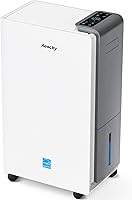
Waykar vs Alorair Dehumidifier: Which to Buy? (November 2026)
Choose the ALORAIR 113 Pints for a crawl space or commercial job, and the Waykar 80 Pint for a finished basement or large living area. In this Waykar vs Alorair dehumidifier comparison, the ALORAIR wins overall for raw moisture removal and rugged build, while the Waykar is the easier fit for everyday home use.
On this page (7 sections)
Choose the ALORAIR 113 Pints for a crawl space or commercial job, and the Waykar 80 Pint for a finished basement or large living area. In this Waykar vs Alorair dehumidifier comparison, the ALORAIR wins overall for raw moisture removal and rugged build, while the Waykar is the easier fit for everyday home use.
The ALORAIR removes up to 113 pints per day at saturation (53 pints per day at AHAM) and covers 1,200 square feet. The Waykar is rated at 80 pints per day and 5,000 square feet, so it spreads a smaller pint rating over a much larger area.
That sounds backwards until you look at how each is built. One is a utility machine for wet, unfinished spaces.
The other is a home appliance for rooms you actually use. The right choice depends on where the unit will sit.
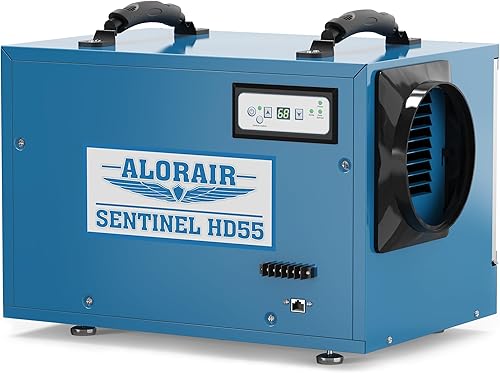 Best for crawl spaces and job sites
ALORAIR 113 Pints Crawlspace Dehumidifier for Commercial
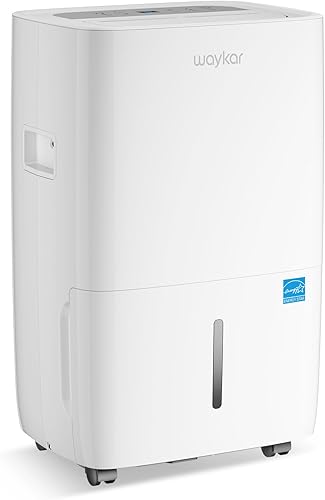 Best for finished basements and living areas
Waykar 80 Pint 5,000 Sq Ft Dehumidifier
Waykar vs Alorair: the two side by side
The ALORAIR wins on water removal and build; the Waykar wins on drainage flexibility and quiet running. Neither machine is a straight upgrade over the other, because they target different rooms.
| Feature | ALORAIR 113 Pints | Waykar 80 Pint |
|---|---|---|
| Daily capacity | 113 pints at saturation, 53 at AHAM | 80 pints per day |
| Rated coverage | 1,200 sq ft | 5,000 sq ft |
| Drain setup | Automatic, no tank | 4.3 L tank or drain hose |
| Casing | Metal | Plastic |
| Humidity range | Set your target level | 30% to 80% |
| Noise | Commercial design, utility-first | About 42 dB |
| Auto defrost | Yes | Yes |
| Weight | 41.7 lb | 31 lb |
| Warranty | 6-year limited | 1 year plus 1 free year on registration |
The pint numbers are the first thing to sort out. ALORAIR's 113-pint figure is measured at saturation, and its AHAM rating is 53 pints per day.
The Waykar's 80 pints is measured at 95°F and 90% relative humidity. Those test conditions are harsh, so expect real-world output in a normal basement to land lower for both units.
What the coverage numbers really mean
A 1,200 square foot rating on a 113-pint machine and a 5,000 square foot rating on an 80-pint machine tell you the makers expect very different rooms.
ALORAIR's figure assumes a damp, enclosed crawl space where the unit runs hard. Waykar's figure assumes an open, drier living area where the air turns over more easily.
Don't pick the bigger coverage number and assume it wins. A wet crawl space under a house needs the machine that pulls the most water, not the one with the widest footprint claim.
Which one removes more water from damp air?
The ALORAIR removes more water per day, and that matters most in a wet, closed space. Its 113-pint saturation rating and 53-pint AHAM rating sit well above the Waykar's 80-pint figure.
Pint ratings only compare fairly when the test conditions match. ALORAIR gives you both a saturation number and an AHAM number, so you can see how output drops as conditions ease.
Waykar publishes one figure, measured at 95°F and 90% relative humidity.
For a crawl space that stays damp year round, the ALORAIR's higher ceiling gives it more headroom. It can keep pulling moisture when the air is at its worst instead of running flat out and still falling behind.
A 120 cfm airflow pushes that dried air back into the space instead of letting it pool in one corner.
For a basement that only feels sticky in summer, the Waykar's 80 pints is more than enough. A 5,000 square foot rating means it can keep a large finished space at a comfortable humidity without straining.
Its 165 cfm airflow is the higher of the two, and the 90 degree auto swing spreads that air across the room so corners don't stay damper than the center.
If your space is smaller but stubbornly wet, capacity still beats coverage. A 600 square foot crawl space with standing moisture needs the stronger machine, not the one rated for a bigger dry room.
Our KNKA dehumidifier review shows how a smaller pint rating behaves in a tighter space.
Drain setup: tank or no tank?
The ALORAIR drains itself and has no tank; the Waykar gives you a tank or a hose. That difference decides where each unit can sit.
The ALORAIR has no bucket at all. It drains automatically, so you run a line to a floor drain, sump pit or outside.
Once it's set up, you don't touch it. That's the right setup for a crawl space you rarely enter.
The Waykar includes a 4.3 L (1.14 gal) tank you can lift out and empty, plus a 6.56 ft drain hose and connector for continuous gravity drainage. The hose uses a standard 3/4 inch garden hose connection, so it threads onto a typical outdoor spigot or drain fitting without an adapter.
You get to choose.
In a finished basement, the tank is handy when there's no drain nearby. In a utility space, the hose removes the chore.
Our guide to built-in pump vs no pump dehumidifiers explains when you need a pump to push water uphill.
Where each drain style works best
Pick the ALORAIR when a drain line is easy to reach and you want zero maintenance. A crawl space with a sump pit is the classic case.
Pick the Waykar when you might move the unit between rooms or when no drain is close. The tank lets it run anywhere there's an outlet.
The full tank alert light tells you when to empty it, so you aren't guessing from the water line.
Neither drain style is better in the abstract. The room decides.
If you can't run a hose to a drain, the ALORAIR's no-tank design becomes a problem rather than a convenience.
Build quality: metal shell or home appliance?
The ALORAIR is built for rough conditions; the Waykar is built for living spaces. You can feel the difference in the materials and the warranty.
ALORAIR uses a metal outer casing that it says withstands more rugged conditions. The unit weighs 41.7 lb and has a rugged handle for carrying it between jobs.
A MERV-1 filter protects the internal parts from dust. It is ETL listed for safety, and ALORAIR notes that you can add the filter to the cart with the dehumidifier to get it at no charge.
Waykar uses a plastic body and weighs 31 lb. It's lighter to move around a house and looks at home in a finished room.
Its copper tubing and upgraded compressor are built around a home duty cycle rather than a job site.
The warranty split is just as clear. ALORAIR backs the Sentinel HD55 with a 6-year limited warranty, with the first 2 years under full coverage.
Waykar offers 1 year plus a free second year when you register the unit.
For a job site or a rental property where the unit takes a beating, the metal shell and longer warranty tip the scale. For a basement you keep clean and dry, the lighter plastic body is easier to handle.
Humidity control and running noise
The Waykar gives you finer humidity control and quieter running; the ALORAIR is set-and-forget. If the unit sits near where people spend time, this is the section that matters.
Waykar lets you set humidity anywhere from 30% to 80%. Many home dehumidifiers stop at 40%, so the lower floor is a real advantage if you're fighting mold in a damp corner.
Waykar also offers a 24-hour timer so you can schedule it around your day. The ALORAIR is adjusted to a target humidity setting to minimize moisture and reduce odor, but it gives no numeric range to compare against.
The Waykar also runs at about 42 dB. That's a soft background hum you can live with in a basement office or a bedroom next door.
ALORAIR's design is commercial, so expect a louder machine that you set and leave alone in a utility space.
It focuses on hitting a target humidity level and staying there, with auto defrost to keep running in the cold. An optional remote control connects over a 25 foot CAT 5 cable, so you can start and stop the unit and adjust humidity from upstairs without going down into the crawl space.
Picking by where the unit will sit
If the dehumidifier goes in a room you use, choose the Waykar. Quiet running and a wide humidity range make it a better housemate.
If it goes in a crawl space, a basement utility corner or a warehouse, choose the ALORAIR. Noise doesn't matter there, and hands-off draining saves you a weekly chore.
The optional remote is the one comfort feature worth adding for a space you would rather not enter.
Cold spaces and auto defrost
Both units defrost automatically, which matters in a cold crawl space or garage. Frost on the coils stops a dehumidifier from pulling water, so this feature keeps either machine working through a cold snap.
ALORAIR describes its system in detail. Sensors watch the temperature, and when it drops low the unit starts a defrost cycle.
The compressor pauses while the fan keeps running so the frost thaws, then normal operation resumes. That saves energy and helps extend the unit's life.
The unit carries an upper temperature rating of 104°F and runs on standard 115 volt AC power.
Waykar's AI-smart protection system detects frost and abnormal operation and starts auto defrost and overload protection in response. It's a similar idea with more automation built in.
The unit also has overheat protection in its safety features.
The ALORAIR's low-temperature operation and commercial focus make it the more natural pick for an unheated crawl space. The Waykar is the better choice for a basement that stays at normal household temperatures, where frost is less of a concern.
Matching the unit to your climate
Think about the coldest week of the year in your space, not the average. A crawl space that dips toward freezing will cycle through defrost more often, and the ALORAIR's commercial build is designed for that duty.
A heated basement rarely frosts its coils, so the Waykar's defrost system is backup rather than a daily event. The AI monitoring still helps when a cold snap catches the room off guard.
Which should you buy?
Buy the ALORAIR 113 Pints if your space is a crawl space, a commercial room or any wet area where you want maximum water removal and no tank to empty. It wins this comparison overall because it removes more water, takes rougher treatment and carries the longer warranty.
The metal casing and 113-pint saturation rating are built for the job.
Buy the Waykar 80 Pint if your space is a finished basement, a large living area or a room where noise matters. Its tank-or-hose drainage, 30% to 80% humidity range and quiet 42 dB running make it the easier unit to live with.
The 5,000 square foot rating covers a big open space without trouble.
One more thing to weigh: the Waykar's plastic build and 1-year base warranty suit a home, not a job site. If the unit will move between properties or sit in a dusty workshop, the ALORAIR's metal shell earns its keep.
The ALORAIR's compact 19.2 by 12.2 by 13.3 inch frame and rugged handle make it easy to carry down a hatch and back up again.
If you're still comparing home-focused units, our AEOCKY vs Waykar dehumidifier breakdown covers two similar machines, and the Midea 50 pint dehumidifier review looks at a smaller-capacity option for tighter rooms.
For most readers with a wet crawl space or a commercial space, the ALORAIR 113 Pints is the waykar vs alorair dehumidifier decision. For a finished basement you want to enjoy, the Waykar 80 Pint is the smarter buy.
Frequently asked questions
Which is better, Waykar or Alorair?
The ALORAIR 113 Pints is the stronger pick for crawl spaces and commercial work because it removes more water and has a metal casing. The Waykar 80 Pint is the better fit for finished basements and living areas, thanks to its tank option, quiet running and wide humidity range.
Do both dehumidifiers drain automatically?
The ALORAIR drains automatically and has no tank, so it needs a drain line. The Waykar gives you a choice: empty its 4.3 L tank by hand or attach the included hose for continuous gravity drainage.
How much area does each one cover?
ALORAIR rates the Sentinel HD55 for up to 1,200 square feet. Waykar rates its 80 pint unit for up to 5,000 square feet.
Coverage depends on how damp and closed the space is, so a small, wet crawl space can still need a high-capacity unit.
Which dehumidifier is quieter?
Waykar says its unit runs at about 42 dB, which is quiet enough to sit in a living area. ALORAIR's design is commercial and utility-first, so it's the louder of the two in a shared space.
Which one suits a cold crawl space?
The ALORAIR includes automatic defrost, which clears frost from the coils in low temperatures. That makes it the more sensible choice for a crawl space that gets cold, since frost buildup would otherwise cut into its running time.