Built-In Pump vs No Pump Dehumidifier: Which to Buy? (November 2026)
Choose a built-in pump when the dehumidifier will run for days in a basement or big room and you want to set the drain and forget it. Choose no pump when you empty the bucket yourself or can run a gravity hose to a floor drain.
On this page (8 sections)
Choose a built-in pump when the dehumidifier will run for days in a basement or big room and you want to set the drain and forget it. Choose no pump when you empty the bucket yourself or can run a gravity hose to a floor drain.
The built-in pump vs no pump dehumidifier decision comes down to how you remove water. A pump pushes it uphill to a sink or window.
A no-pump unit drains by gravity or fills a tank you carry.
This comparison covers the two products above, both with pumps, against the no-pump setup. The winner for most readers is the Hisense 50-Pint Lift-Up, because the pump and top-lift tank remove the daily bucket chore.
 Best for hands-free draining
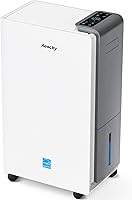
Hisense 50-Pint Lift-Up Portable Dehumidifier with Built-In Pump

Built-in pump vs no pump: which drains easier?
A built-in pump drains easier for most people, because it moves water up and away without a downhill path. A no-pump unit needs gravity on its side or a person to empty the bucket.
Gravity drainage only works when the hose outlet sits lower than the dehumidifier's drain port. That means a floor drain, a sump pit or a low window.
A sink at counter height won't work without a pump.
The Hisense uses a pump and the included quick-connect hose to route water to a sink or window. The hOmeLabs uses an integrated pump to set up continuous drainage.
Both take the bucket out of the routine.
A no-pump dehumidifier still has continuous drain options. The difference is that you supply the downhill route.
When your only drain is uphill or across the room, the pump earns its keep.
The pump also helps with placement. You can put the unit where the damp air is, not where the drain is.
That matters in a long basement where the wet corner sits far from the floor drain.
When gravity drainage still wins
Gravity drainage is simpler and has one less part to clog. If your basement has a floor drain near the damp spot, a no-pump unit and a short hose do the job with less hardware.
It also helps when the unit sits on a raised floor or a shelf. A downhill run to a lower drain is easy to set up and easy to check.
The KNKA dehumidifier review covers a smaller unit where bucket emptying is part of the routine, so you can weigh that against a pump setup.
The two pump units side by side
The Hisense scores higher because its top-lift tank and lift-free drain suit more rooms. The hOmeLabs adds Wi-Fi control and covers a larger stated area.
| Feature | Hisense 50-Pint Lift-Up | hOmeLabs Dehumidifier 7 |
|---|---|---|
| Daily capacity | 50 pints | 50 pints |
| Drainage | Built-in pump, hose included | Built-in pump |
| Tank | 18 pints, top-lift | 1.6 gallons |
| Stated floor area | 4,500 sq ft | 7,500 sq ft |
| Weight | 20.2 lb | 30.5 lb |
| Extra control | Three speeds | Wi-Fi, three modes |
| Our score | 9.7 | 9.5 |
The Hisense measures 11 x 16.9 x 19 inches. The hOmeLabs measures 11 x 15.4 x 24.3 inches, so it stands taller and narrower.
Both units move 50 pints per day at their rated conditions. The hOmeLabs states a maximum of 120 pints at 95°F and 90% RH, which reflects how much more water hot, humid air holds.
The hOmeLabs also has Wi-Fi, a 24-hour timer and a washable filter with a check indicator. The Hisense has a washable, removable filter and three speeds.
Where the hOmeLabs fits better
The hOmeLabs covers a stated 7,500 square feet and adds Wi-Fi, so you can change settings from your phone. That suits a large open basement or a big living area where the unit sits out of reach.
Its cabinet is taller, which may suit a corner better than a wide spot. The 30.5 lb weight makes it harder to carry up stairs, so plan a spot on the floor where it will stay.
Our Midea 50 pint dehumidifier review is another large-capacity option to weigh against these two if Wi-Fi isn't a priority.
Which unit suits a damp basement?
The Hisense suits a damp basement where you want to move the unit around and skip the bucket. Its 18-pint top-lift tank sits within easy reach, and four casters roll it to the wet corner.
The 20.2 lb weight is lighter than the hOmeLabs, so shifting it between rooms is less of a chore. The top-lift design means you don't bend down to remove the tank when you do run it on bucket mode.
Its stated 4,500 square feet is smaller than the hOmeLabs figure. For a typical home basement, that's still a large area.
The pump matters more than the coverage number when the unit runs all day.
The hOmeLabs suits a very large basement that stays damp across a wide floor. Wi-Fi lets you nudge the humidity setting without walking to the unit.
The 7,500 square feet figure is the largest of the two.
Either pump unit needs a hose route. Make sure a sink, window or drain sits within the hose reach, and keep the run free of kinks.
A pump that pushes water through a pinched hose won't help.
Bucket size and emptying
The Hisense tank holds 18 pints. That's a large bucket, so even in bucket mode you empty it less often.
The hOmeLabs tank is 1.6 gallons, about 12.8 pints.
At 50 pints per day, a 12.8-pint tank fills in under a day in wet conditions. An 18-pint tank buys more time.
Neither tank removes the job for good, though, which is why the pump matters.
If you want the full picture on bucket size and continuous drainage across brands, our guide to the best portable dehumidifiers sorts units by drainage type.
How much does the pump change placement?
A pump frees the unit from the drain, so you can put it where the air is worst. A no-pump unit has to sit near a downhill drain or close enough that carrying the bucket is easy.
In a basement, the dampest spot is often a corner far from the floor drain. A pump lets you place the dehumidifier there and send water to a sink or window with the hose.
The Hisense pump and quick-connect hose route water to a sink or window. The hOmeLabs pump sets up continuous drainage the same way.
In both cases, the hose does the traveling.
A no-pump unit in that corner needs either a long downhill hose or regular bucket trips. A long gravity hose can sag and trap water, so the run has to stay smooth.
Placement also affects air flow. Leave space around the unit and keep it away from walls that block the intake.
A pump doesn't change that, but it does let you choose the spot on airflow rather than drainage.
Rooms with no drain at all
A room with no drain and no low window is the pump's best case. A bedroom, attic or finished basement corner may have no floor drain within reach.
The pump sends water to a sink or window instead.
A no-pump unit in that room relies on the bucket. That's fine for a small space where the unit runs a few hours a day.
It's a daily chore in a wet basement running around the clock.
Which is easier to live with day to day?
The pump is easier day to day because you stop emptying a bucket. You still clean the filter and check the hose, but the water leaves on its own.
The hOmeLabs adds Wi-Fi and three modes: Comfort, Turbo and Continuous. You can set it from your phone and use the timer to run it on a schedule.
The washable filter has a check indicator so you know when to clean it.
The Hisense keeps controls simple with three speeds and a washable, removable filter. The top-lift tank is easy to reach when you do use bucket mode.
Four casters make it simple to move.
Both units need the same basic care: wash the filter, keep the hose clear and wipe the tank. A pump adds one part to check.
If the hose clogs, the pump can strain, so inspect the line now and then.
The Hisense weighs 20.2 lb and the hOmeLabs weighs 30.5 lb. If you need to carry the unit up or down stairs, the lighter one is easier.
Casters help on one level, not on steps.
Noise matters in a bedroom or home office. The Hisense lists a low-noise system for bedrooms, living areas and home offices.
The hOmeLabs lists quiet operation as well. Neither figure gives a decibel rating, so placement away from the head of the bed still helps.
Pump vs no pump: the cost and upkeep trade
A pump unit costs more up front and adds a part to maintain; a no-pump unit costs less and asks more of you. The right trade depends on how often the unit runs.
A pump unit carries the pump as extra hardware. In return, you skip the daily bucket trip.
Over a long, wet season in a basement, that's a lot of trips saved.
A no-pump unit costs less and has fewer parts. You supply the labor: empty the bucket or set up a gravity hose.
If the unit runs a few hours a week in a small room, that labor is small.
Upkeep differs too. A pump needs its hose and outlet checked for clogs.
A no-pump unit needs the bucket emptied and cleaned, and the filter washed. Both need the filter cleaned on the brand's schedule.
If the drain route is easy, the no-pump unit is the simpler machine. If the route is hard or the unit runs all day, the pump earns its cost back in time and effort.
Our AEOCKY vs Waykar comparison looks at two no-pump-style units if you want to see how the other side of this choice performs.
Who should buy which?
Buy a built-in pump unit if the dehumidifier will run unattended in a basement or big room and the drain is uphill or far away. Buy a no-pump unit if a floor drain is close and downhill, or if you'll empty a small bucket without much trouble.
The Hisense 50-Pint Lift-Up is the pick for most people choosing a pump unit. The top-lift 18-pint tank and four casters make bucket mode easy, and the pump handles the rest.
It suits a damp basement, a laundry room or a big living area.
The hOmeLabs Dehumidifier 7 is the pick for a very large open space where you want Wi-Fi control. Its 7,500 square feet coverage and three modes suit a wide basement floor.
The 30.5 lb weight means it stays put once placed.
Choose a no-pump unit when your setup is simple. A floor drain near the damp spot, a sump pit or a low window makes gravity drainage easy.
A small room that needs a few hours of drying a week also suits a bucket unit.
Quick decision guide
- Basement running all day, drain far away: pick the Hisense 50-Pint Lift-Up.
- Very large open space, want phone control: pick the hOmeLabs Dehumidifier 7.
- Floor drain close and downhill: a no-pump unit saves money and hardware.
- Small room, short runs: a no-pump bucket unit is enough.
The verdict
For most readers, the built-in pump wins the built-in pump vs no pump dehumidifier choice, and the Hisense 50-Pint Lift-Up is the one to buy. The pump and top-lift tank remove the daily bucket chore, and the 20.2 lb body is easier to move than the hOmeLabs.
Pick the hOmeLabs Dehumidifier 7 instead if you need the larger 7,500 square feet coverage and want Wi-Fi control. Its 30.5 lb weight and taller cabinet suit a spot where it will stay.
Stick with a no-pump unit only when a downhill drain is close and easy. In that case, skip the pump, save the hardware and run a short gravity hose.
If you're still sizing your space, our guide to the best portable dehumidifiers helps you match capacity to the room before you choose a drain type.
Frequently asked questions
Is a built-in pump dehumidifier worth the extra cost?
A built-in pump is worth it when the unit runs for days and you can't reach a floor drain. The pump pushes water up and out to a sink or window, so you stop emptying a bucket.
If you can run a gravity hose downhill to a drain, skip the pump.
Can a no-pump dehumidifier drain continuously?
Yes. A no-pump unit drains by gravity through a hose when the outlet sits lower than the drain.
You need a downhill path to a floor drain or sump.
The unit can't push water uphill, so a sink above the outlet won't work.
How much water does a 50-pint dehumidifier collect?
A 50-pint unit removes up to 50 pints per day in the rated conditions. That's about 6 gallons, so a bucket fills fast in a damp basement.
A pump or gravity hose matters more at this capacity than on a small unit.
Where can a pump dehumidifier send its water?
The pump pushes water to a sink, a window or another drain within the hose reach. Route the hose so it doesn't kink or run uphill after the pump.
Keep the manual's maximum lift in mind before you place the unit.
Do pump dehumidifiers need more maintenance?
The pump adds a part that can clog if debris gets in, so check the hose and pump outlet now and then. No-pump units only need the bucket emptied and the filter cleaned.
Both need the filter washed on the schedule the brand gives.