How Much Water Should a Dehumidifier Collect?
A typical home dehumidifier collects about 10 to 30 pints of water a day, though a 50 to 80 pint unit in a wet basement can fill its tank in under a day. The real number depends on room size, humidity level, temperature and how often the space gets fresh damp air.
On this page (10 sections)
- How much water should a dehumidifier collect in a day?
- What affects how much water a dehumidifier pulls?
- Is 10 pints a day too little or just right?
- How often will you empty the tank?
- When should you switch to a drain hose?
- How do you measure what your unit really collects?
- What counts as too much or too little water?
- How do you keep collection steady over time?
- What should you do with the collected water?
- The bottom line on dehumidifier water collection
A typical home dehumidifier collects about 10 to 30 pints of water a day, though a 50 to 80 pint unit in a wet basement can fill its tank in under a day. The real number depends on room size, humidity level, temperature and how often the space gets fresh damp air.
That range covers most homes. The amount a dehumidifier collects changes with the weather, the season and the room, so a steady daily figure matters more than any single day's total.
How much water should a dehumidifier collect in a day?
Plan on roughly 10 to 30 pints a day for a normal damp room. A small bedroom or bathroom may only give 5 to 10 pints, while a soggy basement or crawl space can push a large unit to 40 pints or more.
The rated capacity on the box is not the daily water you'll see. That rating is measured under standard test conditions, often 80°F and 60% relative humidity.
In a cooler, drier room, the same unit collects less.
Think of the rating as a ceiling, not a promise. A 50 pint dehumidifier rated at 50 pints a day rarely fills a 50 pint tank in one day unless the air stays very wet.
Most homes land well below the rated number, which is normal and not a sign of a weak unit.
What affects how much water a dehumidifier pulls?
Four things drive the daily total: room size, starting humidity, air temperature and how much new moist air gets in. Each one changes the water you collect, so a single number can't fit every home.
Room size and humidity level
A bigger room holds more moisture, so it takes longer to dry but yields more water overall. A 1,000 sq ft basement at 70% humidity holds far more water vapor than a 200 sq ft bedroom at the same reading.
Humidity level matters most. Dropping a room from 70% to 50% means pulling out a lot of water.
Keeping it at 50% afterward takes much less, because the unit only removes what leaks back in.
Temperature and the compressor
Compressor dehumidifiers work best in warm air. Warm air holds more moisture, and the cold coils can condense more of it, so summer collection runs high.
In a cold basement below 65°F, frost builds on the coils and output drops.
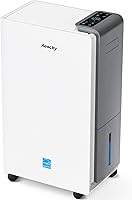
That's why the AEOCKY 80 Pint unit lists two figures. It pulls 80 pints a day in hot, humid summer air and 56 pints a day in a warm damp basement.
Both are rated conditions, not what you'll always see. For the full process, see how a dehumidifier works.
Fresh air and open spaces
Every open window, gap under a door or vent brings in new moisture. A sealed room lets a dehumidifier catch up and then idle.
A leaky basement keeps feeding it water, so the tank fills faster and runs longer.
Laundry hung indoors, wet firewood and damp storage all add load too. A load of washing can push collection up by several pints on the day you dry it.
Is 10 pints a day too little or just right?
10 pints a day is a healthy figure for a small, fairly dry room. It's too little only if the space still feels clammy or the humidity stays high after a full day of running.
Judge the result by the room, not the tank. If the hygrometer reads 50% to 55% after a day and the air feels dry, the unit is doing its job.
If the reading stays at 65% or higher with the unit running, it's undersized for the space or the room is leaking too much moist air.
A tank that fills quickly in a large wet space is a good sign the unit is working. It just means you'll empty it more often unless you switch to a drain hose.
How often will you empty the tank?
Empty it when the tank fills, which can be once a day in a wet space or once a week in a dry one. A larger tank means fewer trips, but tank size and daily output decide the real schedule.
The AEOCKY 80 Pint unit has a 1.45 gallon tank. At its rated 56 to 80 pints a day in damp conditions, that tank can fill in just a few hours.
In a mild room collecting 10 pints daily, it lasts several days.
Tank size is separate from daily capacity. A unit that pulls a lot of water and has a small tank means frequent emptying.
For constant drying, set up a drain hose and let it run without checking the tank.
When should you switch to a drain hose?
Switch to a hose when the tank fills more than once a day or you want continuous drying. A hose sends the water to a floor drain or sump, so the unit runs without a break.
Constant drainage suits basements during rainy weeks, crawl spaces and any room where you want steady drying for days. It also removes the risk of the unit shutting off when the tank hits its limit.
The Ebusin 12 ft hose fits most 3/4 inch outlets and uses brass fittings with a rubber seal. Its 12 ft length reaches a floor drain in many setups, and the hose can be cut to size.
Route the hose so it slopes down to the drain with no low spots where water can sit. Check the connection at the unit for drips after the first run.
For a longer hose run, keep the outlet below the unit so water flows by gravity.
How do you measure what your unit really collects?
Use a hygrometer to track the room and read the tank against it. The humidity reading tells you whether the water collected matches the room's condition.
A small hygrometer shows the room's humidity and temperature, so you can see whether the unit is keeping up. The Govee H5075 reads humidity to within 3% RH and temperature to within 0.54°F, and the app stores 20 days of graphs.
Place it a few feet from the dehumidifier, away from the outlet air. Compare the reading before and after a day of running.
A steady drop toward your target means the water collected is doing its job. If the reading doesn't move, check the setting and the room's air leaks.
What counts as too much or too little water?
Too much water means the tank fills in hours or the humidity won't drop. Too little means the tank stays empty while the room still feels damp.
Signs of too much:
- The tank fills within a few hours in a sealed room.
- The humidity reading stays above 60% all day.
- Water pools around the unit or the hose drips.
Signs of too little:
- The tank stays empty for days in a clearly damp space.
- The unit runs but the humidity doesn't fall.
- The target humidity is set higher than the room's actual level.
If the tank stays empty in a wet room, lower the humidity setting and check that the compressor is running. If the tank fills constantly in a sealed room, look for a leak or a wet source the unit is fighting.
A unit that cools the air without drying it may be set wrong; our piece on whether a dehumidifier cools a room explains the difference.
How do you keep collection steady over time?
Set the humidity target and keep the room sealed so the unit collects a steady amount. A steady daily figure means the space is under control and the unit isn't fighting new moisture.
Clean the filter every couple of weeks. A clogged filter cuts airflow and lowers the water collected without any warning.
Check the coils for dust, and keep the intake clear of walls and furniture.
Keep windows and doors shut while the unit runs. Fix obvious drafts and repair damp patches before they feed the unit.
Empty or drain the tank before it fills, so the unit doesn't sit idle when the tank hits its limit.
Over time, watch the daily amount. A slow drop in water collected with the same settings can mean a dirty filter, a colder room or a unit that's aging.
Our guide on how long dehumidifiers last covers when a falling output means a worn unit rather than a fixable problem.
What should you do with the collected water?
You can pour it down a drain, use it outdoors or, with care, water plants. It's distilled-like water from the air, though it can carry dust and trace metals from the coils.
Many people tip it on garden plants or outdoor ornamentals. It isn't sterile and shouldn't be drunk.
Our guide on whether you can use dehumidifier water for plants covers which plants and what to watch for.
If you collect a lot, a drain hose saves the daily emptying. That's the easiest way to keep a wet basement drying without hauling a tank.
The bottom line on dehumidifier water collection
Expect about 10 to 30 pints a day in most homes, with more in a wet, warm basement and less in a small, mild room. How much water a dehumidifier should collect depends on the space, not the box rating alone.
If your tank fills fast and the room stays humid, the space is wet or leaky. If it fills slowly and the room dries out, you're in good shape.
For steady drying, use a drain hose and check the room with a hygrometer. If you want to size a unit for your space, our dehumidifier sizing guide helps match capacity to room size.
Frequently asked questions
Is it normal for a dehumidifier to collect no water at all?
It depends on the room. An empty tank in a dry space with the target set low is expected, not a fault.
But if the tank stays empty after a day in a humid room, treat it as a warning sign and check that the humidity setting is below the room's actual level and that the unit is running.
Does a dehumidifier collect more water in summer?
Yes. Warm air holds far more moisture than cool air, so a unit pulls more water in summer and less in winter.
A 70-pint model rated for 80°F and 60% humidity will collect noticeably less in a cool 60°F basement.
Why does my dehumidifier's tank fill faster on some days?
Weather, open windows and laundry drying indoors all add moisture. A rainy stretch or a load of clothes hung inside can push collection well above your normal daily amount.
A sealed room with steady humidity should collect at a fairly steady rate.
Should I run a dehumidifier in an empty tank all day?
You can if the unit shuts off automatically when full. Most compressor dehumidifiers stop when the tank reaches its limit, so a full tank just means the room waits until you empty it.
For all-day drying, a drain hose is the easier setup.
Can I use the collected water on my houseplants?
Often yes, though it's not sterile and can carry dust or trace metals from the coils. Many people use it on outdoor plants or ornamentals rather than edibles.
Our guide on dehumidifier water for plants covers the safe way to do it.