Will a Dehumidifier Dry Out Damp Walls?
Yes, a dehumidifier will dry out damp walls when the moisture comes from humid air. It pulls water vapor out of the room so the wall can release its moisture. It won't fix a leak, rising damp or water coming through the masonry, so find the source first.
On this page (9 sections)
- How does a dehumidifier dry out damp walls?
- When will a dehumidifier dry out damp walls, and when won't it?
- How long does it take to dry a damp wall?
- What size dehumidifier do you need for damp walls?
- How should you set up a dehumidifier to dry walls?
- How do you keep the unit running without emptying the tank?
- How do you know when the wall is actually dry?
- Why are the walls still damp after running a dehumidifier?
- Which dehumidifier setup suits your damp wall?
Yes, a dehumidifier will dry out damp walls when the dampness comes from moisture in the air. It lowers the humidity in the room, and the wall then gives up its water vapor to that drier air.
It cannot fix a leak, rising damp or water pushing through the brick, so rule those out first.
The rest of this guide covers when drying works, how long it takes, how to set the unit up, and the cases where a dehumidifier is the wrong tool.
How does a dehumidifier dry out damp walls?
A dehumidifier dries walls by removing water vapor from the room air, which lets the wall release moisture it has absorbed. Warm, humid air holds water that settles into plaster and paint.
Pull that vapor out and the wall dries from the surface inward.
A compressor unit draws air over cold coils. Water condenses on the coils, drips into a tank or hose, and drier air blows back into the room.
That cycle keeps running until the humidistat is satisfied. Our explainer on how does a dehumidifier work covers the coil and fan process in more detail.
The key point for walls is that the unit works on the air, not on the wall directly. The wall dries because the air around it stays dry.
That's why airflow matters as much as raw capacity.
When will a dehumidifier dry out damp walls, and when won't it?
It works when the damp comes from condensation or high indoor humidity. It fails when water has another route into the wall.
Sorting the two cases takes a few minutes and saves you from buying the wrong fix.
Signs a dehumidifier can help include walls that feel clammy rather than wet, damp patches that spread in humid weather, and condensation on windows and cold pipes. A musty smell in a closed room points the same way.
Running the unit should lower the hygrometer reading within a day.
Signs it won't help include water staining that grows after rain, salt tide marks low on the wall, and paint blistering near the floor. Those point to a leak, rising damp or water tracking through the masonry.
A dehumidifier can't outrun water that keeps arriving, so fix the source first. A cheap moisture meter or a visual check outside the wall tells you which problem you have.
How long does it take to dry a damp wall?
Surface dampness usually clears in 2 to 4 days, and soaked masonry can take 1 to 2 weeks. The wall type, how wet it is and how much air moves all change the timeline.
A plasterboard wall in a small, sealed room dries fastest. Solid brick or stone holds far more water and releases it slowly.
Cool basement walls are the slowest case because the surface stays cold and condensation keeps forming.
The honest test is a humidity reading, not a feel. Set the unit to hold 45 to 50% relative humidity and watch a hygrometer in the room.
When the reading stays flat with the unit off for a few hours, the wall is as dry as the air allows. Don't judge by touch alone, since plaster can feel cool and slightly damp even when it's dry.
What size dehumidifier do you need for damp walls?
Match capacity to the room and the amount of water you're pulling out. A small bedroom with light condensation needs far less than a damp basement with wet walls.
Pint ratings are measured under set conditions, so use them as a guide rather than a promise. A 20 to 30 pint unit suits a closed bedroom or hallway.
A 50 pint class suits a living area or a basement up to about 1,500 sq ft. A 70 to 80 pint unit handles large, very humid basements and open-plan spaces.
Cold rooms change the maths. Compressor units lose efficiency below about 65°F, so an unheated cellar may need a desiccant model instead.
Check the room's temperature before you buy.
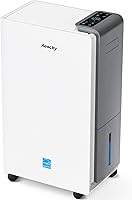
The AEOCKY RHEA-001 is a compressor dehumidifier with an 80 pint daily rating and a 1.45 gallon tank. It holds ENERGY STAR Most Efficient 2025 certification and is built for large, humid spaces.
The brand says its defrost sensors keep it running in cooler rooms, and the 44dB low fan speed suits a bedroom or living area. Its smart humidity control and power-off memory help when you run it on a schedule.
Check the exact room size and temperature range before you order.
How should you set up a dehumidifier to dry walls?
Seal the room, place the unit near the damp wall, and give the air room to move. Setup matters as much as capacity, and a few simple choices speed up drying.
- Close windows and doors so the unit dries the air already in the room.
- Put the dehumidifier 6 to 12 inches from the wall, not flat against it.
- Point a fan across the wall so air keeps moving over the damp surface.
- Set the humidistat to 45 to 50% RH and leave it running.
- Empty the tank often or fit a drain hose for continuous running.
Move furniture off the wall so air can reach it. If the wall is covered in sealed paint or vinyl wallpaper, moisture can trap behind it.
In that case, drying the room air won't reach the wall itself, and the covering may need to come off.
How do you keep the unit running without emptying the tank?
Use a drain hose for continuous drying, especially in a basement or during a long damp spell. A full tank switches the unit off, which stalls the job overnight.
Most units include a hose outlet at the back. Run a hose to a floor drain, sink or sump, and keep the run downhill.
A blocked or kinked hose backs water into the tank and stops the unit.
The Ebusin hose is 12 feet long with a 3/4 inch female threaded end and a nickel-plated brass fitting plus rubber seal. It can be cut to length, and the rubber coils up for storage.
The brand backs it with a 10-year guarantee. It suits anyone running a unit around the clock near a drain.
Check the outlet size on your unit first, since not every model uses the same thread.
How do you know when the wall is actually dry?
Trust a humidity reading, not your hand. A wall can feel cool and slightly tacky long after the moisture has gone.
The Govee H5075 reads temperature to ±0.54°F and humidity to ±3% RH, refreshing about every 2 seconds. Its 3-inch LCD shows max and min records plus a dry, comfort or wet indicator.
The app sends an alert when humidity leaves your set range and stores up to 2 years of data for export. That history is the useful part: it shows whether the room is trending drier or stalling.
It connects by Bluetooth only, within about 164 feet in open space. Place it a few feet from the wall, away from the unit's exhaust.
Why are the walls still damp after running a dehumidifier?
If the walls stay wet, moisture is arriving faster than the unit can remove it. A dehumidifier dries air, so a steady water source wins every time.
Check the outside of the wall first. Cracked render, a blocked gutter or a downpipe emptying against the wall all feed damp in.
Inside, look for leaking pipes, a failed shower seal or a washing machine outlet. Rising damp shows as a tidemark low on the wall and needs a damp-proof course, not a dehumidifier.
A unit that runs constantly and never reaches its set point is working against a source. It may also be undersized for the space, or set too low for a cold room.
If you've sealed the room, checked the outside and still see wet patches growing, call a damp specialist before spending more on equipment.
Which dehumidifier setup suits your damp wall?
Pick the capacity for the room, then add a drain hose and a hygrometer to run it properly. That combination dries walls faster and tells you when to stop.
For a large or very humid basement, choose the AEOCKY 80 pint unit. For a small bedroom or hallway, a 20 to 30 pint model is enough.
Add the Ebusin hose for overnight running and the Govee hygrometer to track the result. If your space is cold and unheated, compare a desiccant model before buying a compressor unit.
For small rooms and closets, our guide to does a dehumidifier cool a room explains the side effects of running one. If you're weighing chemical absorbers against a powered unit, see dehumidifier vs DampRid moisture absorbers.
And before you buy used gear, read how long does a dehumidifier last.
The short answer to will a dehumidifier dry out damp walls is yes, when the damp comes from humid air. Seal the room, set the unit to 45 to 50% RH, keep it running with a drain hose, and confirm the wall is dry with a hygrometer.
If the damp returns or grows after rain, fix the water source before you buy another unit.
Frequently asked questions
Can I leave a dehumidifier running overnight against damp walls?
Yes, most compressor units are designed for continuous running. Use the humidistat or a timer so it cycles instead of running flat out.
Keep the unit clear of the wall by at least a few inches so air can move, and route the drain hose so it cannot trip anyone.
Does a dehumidifier stop mold growing on walls?
It helps by holding indoor humidity at a level mold dislikes, often under 50% RH. It does not kill mold that is already there.
Wipe down and treat visible mold first, then keep the air dry so it does not return.
Should I close the door to dry one damp wall faster?
Yes, sealing the room concentrates the drying. Close windows and doors so the dehumidifier works on the moisture already in the room instead of pulling in more humid outside air.
Open up again once the wall and the reading are dry.