Can You Leave a Dehumidifier On Overnight?
Yes, you can leave a dehumidifier on overnight. Modern units are designed for continuous use, so the real questions are how you drain the tank, what humidity level you set and whether the room is safe and closed up.
On this page (9 sections)
- How does an overnight run actually work?
- Is it safe to run a dehumidifier while you sleep?
- What humidity level should you set for overnight?
- How do you stop the tank filling overnight?
- Does running a dehumidifier overnight cost a lot?
- Which dehumidifier suits an overnight run in a big room?
- Should the room be closed or open overnight?
- What maintenance keeps overnight runs trouble-free?
- So, can you leave a dehumidifier on overnight?
Yes, you can leave a dehumidifier on overnight. Modern units are built to run for long stretches, and many people run them all night in basements, bedrooms and closets.
The real questions are drainage, the humidity setting and a few safety checks.
Running one overnight is a common way to wake up to a drier room. The trick is setting it up so it doesn't stop at 2 a.m. or over-dry the space.
How does an overnight run actually work?
A dehumidifier cools damp air, condenses the water and returns drier air to the room. That process runs quietly and continuously as long as the unit has power and somewhere to put the water.
The fan pulls room air across cold coils. Moisture condenses there, drips into the tank or out a hose, and the warmed, drier air flows back out.
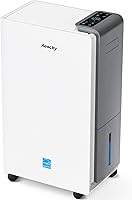
A compressor unit like the AEOCKY 80 Pint keeps that cycle going, which is why it can cover a big space in one night. The only things that stop the cycle are a full tank or a humidity target you've set.
That's why drainage and the setpoint matter more than the hour you switch it on.
Why the compressor matters for a long night
The compressor is the heart of the overnight cycle. AEOCKY describes a High-Efficiency Rotor Compressor Pro+ driving the RHEA-001, with an evaporator and condenser built on a "3+2" structure that uses one more row than typical designs.
It also uses 7mm diameter pure copper pipes rather than aluminum tubes. For overnight use, the practical point is steadiness.
AEOCKY says the design means fewer compressor starts and stops and a longer lifespan. A solid compressor is why a good unit can run all night without sounding strained.
Is it safe to run a dehumidifier while you sleep?
Yes, with basic safety habits. Dehumidifiers are household appliances with sealed electricals, and overnight running is a normal use case.
Keep the unit on a flat, dry floor and leave clear space around its vents.
Don't drape curtains or bedding over it. Check the cord and plug for damage, and never run it on an extension lead that could be tripped over in the dark.
Keep it away from water sources like a leaking pipe or an open window during rain. A unit with a child lock, like the AEOCKY, is easier to leave alone in a home with young children.
If the unit ever smells hot, hums oddly or trips a breaker, unplug it and have it checked before the next overnight run.
What humidity level should you set for overnight?
Set a target around 40 to 50 percent relative humidity and let the unit cycle. That range feels comfortable for most people and discourages mold and musty smells.
Running on continuous mode all night works, but a setpoint saves energy because the compressor rests once the air is dry enough.
The AEOCKY's smart humidity control keeps readings tight with a proprietary humidity compensation algorithm. Set it and forget it, and the unit handles the rest.
If your room starts very damp, run continuous mode for the first night or two, then switch to a setpoint once the reading settles. A room that's too dry can irritate eyes and skin, so don't chase 30 percent.
A separate hygrometer in the room gives you an honest reading each morning.
What the operating modes actually mean overnight
The AEOCKY RHEA-001 offers five operation modes, and the one you pick shapes the whole night. Auto Mode adjusts to conditions on its own, so it's a low-effort choice for a first overnight run.
Constant Humidity Mode holds your chosen setpoint and is the best fit once you know the room's baseline. Continuous Mode runs flat out with no target, which suits a very wet basement but risks over-drying a bedroom.
Smart Drying Mode is aimed at heavier drying jobs, while Sleep Mode trims the noise for a room where people are sleeping. For most bedrooms, set a target in Constant Humidity Mode or use Sleep Mode and let the smart humidistat do the cycling.
How do you stop the tank filling overnight?
Use a drain hose or a large tank so the unit doesn't shut off while you sleep. Most dehumidifiers stop automatically when the tank fills, which protects your floor but ends the drying.
The AEOCKY 80 Pint holds 1.45 gallons and ships with a drain hose and a garden hose adapter in the tank.
Run the hose to a floor drain or a sump pump for truly hands-off overnight use. If you can't reach a drain, empty the tank before bed and keep the target humidity reasonable so it fills more slowly.
In a very damp basement, a hose is the difference between a full night of drying and a unit that quits at midnight. Check the hose for kinks and make sure it slopes downward the whole way.
How to set up the drain hose properly
The kit includes the hose and an adapter that sits in the tank. Fit the adapter, attach the hose and run it to a drain with a steady downhill slope.
A hose that sags in the middle traps water and can back up. If the unit has been moved, recheck the connection before the next overnight run.
AEOCKY also notes an exclusive power-off memory function, so the unit can resume its settings after a power cut. If you use a smart socket, that memory feature lets the unit pick up where it left off when power returns.
Does running a dehumidifier overnight cost a lot?
No, overnight running is a modest addition to your power bill, and efficiency varies a lot between units. A dehumidifier runs a compressor and a fan, so its draw is similar to a small appliance running for several hours.
An efficient model makes the overnight hours cheaper.
AEOCKY says its RHEA-001 holds the ENERGY STAR Most Efficient 2025 certification and that its efficiency cuts electricity use by up to 50 percent compared with non-Energy Star units. Those are the brand's claims.
AEOCKY also points out that only about 2.6 percent of ENERGY STAR models earn that Most Efficient title, so the label is worth checking carefully rather than trusting vague wording on a box. A plug-in power meter shows what your own unit actually uses.
Which dehumidifier suits an overnight run in a big room?
A larger unit with a drain hose and a real humidity setpoint is the easiest to leave running. The AEOCKY 80 Pint is rated for up to 5,500 square feet and 80 pints per day in hot, humid summer air.
That size means it dries a basement or a large living area quickly and then cycles down.
Its lowest fan speed is 44dB, which the brand describes as white-noise quiet. If you want to know whether running one affects room temperature, read does a dehumidifier cool a room.
It doesn't work like an air conditioner, though it can make a muggy room feel better.
What the numbers mean for a night of drying
The 80 pint figure is a peak rating measured in hot, humid conditions, at 95°F and 95 percent relative humidity. In a warm, damp basement at 86°F and 80 percent humidity, the brand rates it at 56 pints per day.
That second number is closer to a typical indoor overnight scenario. The tank volume is separate from the daily capacity, so don't confuse the two: 1.45 gallons is how much it holds before it stops, not how much it can pull in a day.
The unit measures 14.45 by 8.66 by 24.09 inches and weighs 31 pounds, so it's compact enough to tuck into a corner. A narrower footprint leaves more room for airflow, which is what overnight drying depends on.
Should the room be closed or open overnight?
Close windows and doors so the unit isn't fighting fresh damp air. An open window in humid weather keeps feeding moisture into the room.
A closed room lets the dehumidifier pull the humidity down and keep it there.
That's the setup that gets the most out of overnight hours. The one exception is a room with no ventilation and a gas appliance or open flame, where you need proper air movement.
For most basements and bedrooms, closing up is right. If the room feels stuffy, a brief airing during the day is better than leaving a window cracked all night in wet weather.
What maintenance keeps overnight runs trouble-free?
Clean the filter regularly and empty or check the tank each morning. A clogged filter reduces airflow and makes the compressor work harder.
Rinse a washable filter every couple of weeks during heavy use.
A unit that runs all night needs its filter checked more often than one used occasionally. Also wipe the tank to stop slime from building up.
Good airflow and a clean filter are what keep a unit running well, and how long a dehumidifier lasts depends heavily on both. Compare a dehumidifier against DampRid if you're weighing a powered unit against passive absorbers for a small closet.
Passive options can't run all night on their own, which matters for a damp bedroom or basement.
So, can you leave a dehumidifier on overnight?
Yes, and it's one of the better times to run one. Set a humidity target, use a drain hose or empty the tank before bed, keep the room closed and the unit clear of walls and bedding.
Do those four things and an overnight dehumidifier run is quiet, safe and effective.
Check the room's morning humidity reading and adjust the setpoint from there.
Frequently asked questions
Is it safe to sleep in a room with a dehumidifier running?
It's safe if the unit sits on a dry, level floor with clear space around the vents and its cord is not damaged or covered. Set a target humidity so the compressor can cycle instead of running flat out all night.
Does a dehumidifier use a lot of electricity overnight?
Overnight use is a modest slice of a day. A dehumidifier runs a compressor and fan, so its draw is like a small appliance running for several hours.
A plug-in power meter shows what your own unit uses in real time.
Will a dehumidifier make the room too dry overnight?
It can if you leave it on continuous mode with no target. Set the humidistat to a comfortable range and the unit will shut off once it gets there.
Check the reading in the morning with a separate hygrometer.
Can I leave a dehumidifier on overnight in a closed room?
Yes, a closed room is actually where it works best. Closing windows and doors stops new damp air from coming in.
Just keep the unit away from walls, curtains and bedding so air can move freely through it.
What happens if the water tank fills overnight?
Most units switch off automatically when the tank is full. That protects against overflow but ends the drying.
A drain hose or a large tank avoids the problem, especially in a very damp basement.