How Long Should a Dehumidifier Run Per Day?
Run a dehumidifier 8 to 12 hours per day until the room reaches 40 to 50 percent relative humidity, then let the humidistat cycle it on and off. In a damp basement after rain, it may run almost continuously for a day or two; in a dry, sealed room it might run only a few hours.
On this page (9 sections)
- How long should a dehumidifier run per day in a damp room?
- How does a dehumidifier know when to stop?
- Does room size change how long it should run?
- Should a dehumidifier run all day in a wet basement?
- Does running longer than needed cause problems?
- How do you set a daily schedule that works?
- When should you use a moisture absorber instead?
- How long will the unit last if you run it this way?
- The bottom line on daily runtime
How long should a dehumidifier run per day? Run it 8 to 12 hours a day until the room reaches 40 to 50 percent relative humidity, then let the humidistat switch it on and off.
A very wet space may need near-constant running for a day or two, while a dry, closed room might only need a few hours.
There is no single number that fits every home. The right runtime depends on how damp the room is, how big it is, how well it's sealed, and what humidity level you set.
Start longer and let the unit rest once the target is met.
How long should a dehumidifier run per day in a damp room?
A damp room needs 8 to 12 hours a day at first, often more after rain or a leak. The goal is to pull the moisture down quickly, not to run the unit forever.
When the space is noticeably clammy or smells musty, run the dehumidifier continuously until the humidity drops into the 40 to 50 percent range. Most units with a humidistat will then cycle themselves.
In a basement that stays wet, expect one to three days of steady work before the air settles.
If the room feels dry and the humidistat stops the unit within an hour or two, that shorter cycle is normal. The machine is doing its job, and forcing it to run longer just wastes electricity.
How does a dehumidifier know when to stop?
A dehumidifier with a humidistat runs until the room hits your set humidity, then shuts the compressor off. It restarts when the moisture creeps back up, so the daily runtime varies by itself.
On a basic dial model you set a target and the unit decides. On a smart model, the humidity sensor reads the air and cycles the machine within a narrow band.
This is why two identical rooms can log very different daily hours.
To see what's actually happening, put a separate meter in the room. The Govee H5075 reads humidity to within plus or minus 3 percent RH and stores 20 days of readings you can export.
Check the readings at the same time each day. If humidity stays above 55 percent while the dehumidifier runs 12 hours, the room needs more time or a larger unit.
If it sits at 35 percent, shorten the schedule.
Does room size change how long it should run?
Yes, a bigger room or a wetter climate means longer daily runtime. A small bedroom dries in a couple of hours; a large basement may need most of the day.
Dehumidifier capacity is measured in pints per day. A unit rated for a bigger space pulls more water per hour, so it reaches the target sooner.
Our explainer on how a dehumidifier works covers how capacity, airflow and the compressor all affect drying speed.
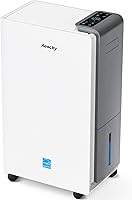
The AEOCKY RHEA-001 is rated at 80 pints per day and covers up to 5,500 square feet. That's a lot of capacity, so in a modest room it will hit the set humidity quickly and spend more time resting.
A small unit in a big basement is the opposite case. It may run all day and never reach the target.
Match capacity to the room before you blame the schedule.
Quick guide by space and condition
- Small bedroom or closet: 2 to 6 hours a day, mostly in humid weather.
- Living area with average dampness: 6 to 10 hours a day.
- Damp basement after rain: 12 to 24 hours until humidity settles, then cycles.
- After a leak or flooding: near-continuous for one to three days.
Treat these as starting points. A humidity meter tells you when to stop.
Should a dehumidifier run all day in a wet basement?
It can run all day in a wet basement, and often should until the moisture is under control. A humidistat still lets it rest once the target is reached.
Basements stay cool and hold moisture, so drying takes longer than in upstairs rooms. The AEOCKY unit works reliably below 65°F, where ordinary units frost up, which matters in a cool cellar.
Its Energy Star Most Efficient 2025 rating means it uses less power while it works.
Running 24 hours a day is only a problem if there's no humidity target. Without one, the unit keeps pulling moisture past the comfortable range and wastes energy.
Set 40 to 50 percent and let it manage itself.
Does running longer than needed cause problems?
Running past the target mostly wastes electricity and can make the air too dry. A dehumidifier set to 40 to 50 percent won't overdo it, but one run flat out will keep going.
Very dry air can feel uncomfortable and may cause wooden furniture, doors and floors to shrink or crack. It also costs more to run.
If your skin feels tight or static builds up, the room is too dry and you can shorten the schedule.
The other risk is the water tank. A unit running all day fills its tank and stops.
If you want continuous running, connect a drain hose so it empties itself. The Ebusin 12-foot hose fits most 3/4-inch outlets and has a brass fitting and rubber seal to prevent leaks.
Set the hose to drain into a floor drain or sump, and check the run of the hose so water doesn't pool. A unit that drains itself can run as long as the humidistat asks without any tank worry.
How do you set a daily schedule that works?
Set the humidity target, let the humidistat cycle the unit, and check the meter daily for the first week. After that, you can adjust the hours to fit the room.
Start with a target of 45 to 50 percent for living spaces and 40 to 45 percent for basements. Run the unit during the most humid part of the day if noise or energy use matters.
Many people run it in the morning and evening and let it rest overnight.
Keep windows and doors closed while it runs. Opening them lets humid outside air back in and makes the unit work longer for no benefit.
A dehumidifier isn't a fan; it's drying a sealed space.
If you want to know whether your unit also cools the air, our answer to does a dehumidifier cool a room explains the small temperature effect and why it isn't a substitute for an air conditioner.
When should you use a moisture absorber instead?
Use a passive absorber for small, closed spaces like closets, cabinets or a boat cabin. For a whole room or basement, a powered dehumidifier does far more work.
A moisture absorber like DampRid collects water slowly and needs replacing. It can't move air or pull pints per day the way a compressor unit can.
Our comparison of a dehumidifier vs DampRid moisture absorbers covers where each one fits.
If the space is small and sealed and you only want to stop mustiness, an absorber is simple. If humidity is above 60 percent and the space is large, run a dehumidifier.
How long will the unit last if you run it this way?
A well-matched unit that cycles on its target should last several years. Frequent starts and stops wear a compressor more than steady running does.
Running a unit longer than needed in a small room means more compressor starts as it cycles quickly. Matching capacity to the room and setting a sensible target reduces that wear.
Our guide to how long a dehumidifier lasts explains the factors that shorten or extend its life.
Clean the filter every couple of weeks and empty or drain the tank. These small jobs keep airflow up so the unit dries faster and runs less.
A clean unit that hits its target quickly will always outlast a clogged one run nonstop.
The bottom line on daily runtime
For most homes, 8 to 12 hours a day until the room holds 40 to 50 percent humidity is the right answer to how long should a dehumidifier run per day, with short cycles after that. A wet basement can run nearly all day for a day or two, and a small dry room may need only a few hours.
Pick the AEOCKY RHEA-001 if you're drying a large or very damp space and want capacity to spare. Add the Govee H5075 to see when the unit should be running, and the Ebusin drain hose if you want it to run all day without a tank stop.
Set the target, watch the meter, and let the humidistat do the rest.
Frequently asked questions
Can I leave a dehumidifier on 24 hours a day?
Yes, modern units with a humidistat are designed to run around the clock and will stop when the target is met. Set the humidity to 40 to 50 percent rather than running it flat out, and use a drain hose so the tank doesn't overflow.
Should I turn my dehumidifier off at night?
Usually you can leave it on, though a bedroom unit may disturb light sleepers. If the noise bothers you, run it during the day and close the room, or pick a model with a sleep mode and a low fan speed.
Does running a dehumidifier longer use more electricity?
Longer running uses more energy overall, but a unit that holds a set humidity only runs when needed. An efficient compressor model that switches off at your target often costs less than a cheap unit that runs nonstop and never quite dries the room.
How long does it take to dry out a damp basement?
Plan on one to three days of steady running for a damp basement, longer after a leak or flooding. Empty or drain the tank, keep windows and doors closed, and check the humidity daily until it stays under 50 percent without the unit working hard.
Is it bad to run a dehumidifier all the time?
No, when it's set to a sensible humidity level. Running 24 hours a day without a target can overdry the air and waste energy.
Use the humidistat so the unit rests once the room is at 40 to 50 percent.