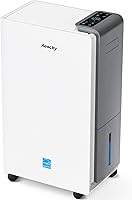
How to Know If a Dehumidifier Is Working
You can tell a dehumidifier is working when the tank fills, the air coming out is drier and warmer, and a hygrometer shows the room's humidity dropping. High airflow and a steady drip through the drain, bleed line or hose confirm it's pulling moisture.
On this page (10 sections)
- What are the first signs a dehumidifier is working?
- How does a hygrometer tell you the room is really drying?
- What should the airflow and exhaust feel like?
- Why check the coils and the frost level?
- How do you confirm the tank and drain are doing their job?
- Is the compressor running the way it should?
- Does the electricity use confirm anything?
- How long should you wait before deciding it's not working?
- What if everything looks fine but the room stays damp?
- How do you confirm your dehumidifier is working?
You can tell a dehumidifier is working when the tank fills, the air coming out feels drier and warmer, and a hygrometer shows the room's humidity dropping. Steady airflow and water collecting in the bucket or draining through a hose confirm it's pulling moisture from the air.
This guide covers how to know if a dehumidifier is working, step by step. Each check takes a few minutes and points to a different part of the appliance, so you can find the problem instead of guessing.
What are the first signs a dehumidifier is working?
Water in the tank is the clearest sign. A working unit collects moisture from the air, and many designs run a bleed line that drips water continuously.
Moisture in the air touches the cold evaporator coil, condenses, and drains down into the bucket. If any of that stops, you'll see it in the tank.
Here is the short version of what to look for:
- Water: any visible water at the bottom of the tank, or droplets falling from the bleed line.
- Air: a strong, steady stream from the fan that feels warm to the touch.
- Coil: the evaporator inside the grille looks wet or frosted, not bone dry.
- Humidity: the reading falls on a separate meter when the room is closed.
Run it for a few hours and check both the tank and the outflow. A dry room may only produce a small amount, so give it time.
How does a hygrometer tell you the room is really drying?
A separate humidity meter gives you a number to track. Watch it fall over a few hours with doors and windows shut, and you know the appliance is doing its job.
A small sensor does more than any guesswork. Put it at chest height, away from drafts and direct sun, and note the starting reading.
The Govee H5075 reports humidity to ±3% relative humidity and updates readings within 2 seconds on its 3-inch LCD. It logs 20 days of history and lets you watch from your phone over Bluetooth.
Set an alert in the app for a range that suits your space. When humidity climbs past it, you'll see it even on days you never go down to the basement.
Skip this if you already own a hygrometer. If you buy one, keep it off the top of the unit and out of the direct fan stream.
What should the airflow and exhaust feel like?
Airflow should be strong and constant, and the exhaust should feel warmer than the room. A working dehumidifier pulls the air through a cold coil, then pushes out drier, warmer air.
Hold your hand a few inches from the outlet. You want a firm breeze, not a faint draft, and that faint warmth is normal.
Our does a dehumidifier cool a room explainer covers why the exhaust heats up and where that heat goes.
Now listen. The fan should hum steadily with no rattling or scraping.
A fan that's barely turning, a sharp rattling noise or long silences points to trouble.
Also look at the grille and filter. A plugged filter blocks airflow and makes the unit work harder for less water.
A quick vacuum of the intake is worth trying before you decide anything is broken.
If the airflow is fine but nothing else looks right, move on to the coils.
Why check the coils and the frost level?
The evaporator coil should feel cold and damp, with at most a light frost. Frost is part of normal operation, but a solid sheet of ice blocks the exchange between air and coil.
Take a look through the intake grille while the unit runs. Look for a wet surface, then switch off and unplug it before touching anything.
If frost covers the coil, turn the unit off and let it melt at room temperature. Make sure it's clear of the wall and curtains and that the room sits within the maker's operating range.
A unit that ices up again quickly has a fan or refrigerant problem. That's a repair job, not a cleaning one.
Many models run an automatic defrost cycle. If frost lingers for long stretches, note it, then check your manual for the defrost behavior.
How do you confirm the tank and drain are doing their job?
Water must leave the coil and reach the bucket or hose. A full tank shuts most units off, so a clogged drain or a badly seated tank can look like a dead machine.
Empty and reseat the float switch and the bucket carefully, then listen for the click as the unit starts. Lift the bucket and watch the bleed line drip, or look for the drain outlet.
Cleaning matters as much as placement. Slime in the channel blocks the flow, and our how does a dehumidifier work guide shows where the water travels from coil to tank.
If you run a hose, check it for kinks and make sure it runs downhill without a loop. A hose that rises before it falls traps water and stops the flow.
The Ebusin 12-foot hose has a 3/4-inch threaded end with a brass fitting and rubber seal, and you can cut it to length.
Choose it when you'd rather not empty the bucket. Most household models accept a 3/4-inch gravity connection.
Is the compressor running the way it should?
A working compressor gives a soft hum and starts and stops with the fan while the unit runs. Most dehumidifiers use a compressor, the way a fridge does, and that's where the cooling comes from.
Listen for a low, steady hum from the lower cabinet while the fan runs. If the fan turns but you hear no hum at all, or the unit cuts out after a few minutes, the refrigeration side may not be starting.
One limit matters here. Many compressors stop below a low temperature, around 41°F on a typical model, because the coil would freeze.
A cold basement can make a unit look dead even when it's fine.
Unplug the unit before opening any panel. Clearing ice, cleaning the filter and resetting the outlet are things you can do yourself.
Anything inside the sealed system belongs to a technician. Check the warranty before you call one so you know what's covered.
Does the electricity use confirm anything?
A meter on the plug shows the unit is drawing power and roughly how hard it's working. A working compressor draws a clear load, while a fan alone draws very little.
The MECHEER Watt Meter sits between the wall outlet and the dehumidifier plug. It tracks power, energy, volts, amps and cost in 7 display modes, and it remembers the last reading when unplugged.
Set the overload limit before you start. The default is 3680W and adjustable from 0 to 3680W, and a big jump as the compressor kicks in is what you're watching for.
If energy use climbs sharply and the tank stays dry, that's a reason to call a technician. Use the meter's memory to log a day or two of running.
Skip it if you don't want to move the plug. A dedicated outlet with a simple on/off test does most of the same job.
How long should you wait before deciding it's not working?
Give a dehumidifier a few hours in a closed room, and a day in a very damp basement. A wet room holds a lot of water, and the machine can only remove so much per hour.
Close the doors and windows, turn off any competing damp source like a dryer vent, and leave the unit set to continuous for the test. Check the tank and the hygrometer at the end.
Small rooms dry fastest. Big, open spaces take longer, and a machine that's undersized for the space will always seem slow.
If the tank fills, the machine works.
Where damp keeps returning, you can review the dehumidifier vs DampRid options. An absorber cannot match a powered unit in a wet room.
A unit that has worked for years and now collects nothing may be near the end. Our guide to how long a dehumidifier lasts covers the typical signs of wear.
What if everything looks fine but the room stays damp?
If the tank fills and the air feels dry but the room stays damp, the source is elsewhere. A working dehumidifier can't fix a leak, wet ground or an open vent that keeps feeding moisture in.
Walk the room for signs: damp patches along the wall base, peeling paint, a musty smell, or condensation on cold pipes. A closed room should register a drop within hours when the appliance is doing its share.
Keep the outdoor humidity in mind when you choose a target. Pulling a damp basement down toward 50% is a sensible goal, but the reading will climb on wet days no matter what the machine does.
How do you confirm your dehumidifier is working?
Work through the checks in order: the tank, the airflow, the coils, the drain and the plug. Then let the humidity reading be the judge over a few hours.
For most people the answer is simple. Empty tank plus steady warm airflow plus a falling hygrometer reading means the unit is fine, and no further action is needed.
The Govee meter is the most useful extra because it turns a guess into a number. The MECHEER plug meter helps when you suspect the compressor, and the 12-foot hose keeps drainage automatic.
If any check fails, unplug the unit and work through the basics before booking a repair. Knowing how to tell if your dehumidifier is working saves you a service call and points you to the right fix.
Frequently asked questions
Why is my dehumidifier running but not filling the tank?
The coil may be iced over, the compressor may not be starting, or the room may already be at your target setting. Switch it off, let any frost melt, and check that the fan and airflow feel normal before running it again.
How long does a dehumidifier take to show results?
Expect the humidity reading to start moving within a few hours in a closed room. A damp basement can take a day or more to reach a set point, and a first tank of water is the clearest early sign.
Why does my dehumidifier blow warm air?
That is normal. The appliance pulls heat out of the air as moisture condenses, then releases that heat back into the room, so the outgoing air feels warmer and drier than the air around it.
Why is water dripping from my dehumidifier but the tank stays empty?
Water in the bucket is the usual sign the appliance is collecting moisture. On a dry day, or in a room that is already within range, it may simply be taking in little water.