9 Best Dehumidifiers for a Small Crawl Space (November 2026)
The best dehumidifiers for a small crawl space include the ToLife Dehumidifier (best overall for tight low crawl spaces), the ALORAIR 113 Pints Crawlspace Dehumidifier for Commercial for continuous drainage, and the Waykar 125 Pints Crawl Space Dehumidifier for water-damaged crawl spaces.
On this page (9 sections)
- The best dehumidifiers for a small crawl space
- How these crawl space dehumidifiers compare
- How we compared these dehumidifiers
- What size dehumidifier fits a small crawl space?
- Does a crawl space dehumidifier need a pump or a drain?
- How much humidity should a crawl space stay at?
- Which crawl space dehumidifier handles cold air best?
- Do you need a commercial-grade dehumidifier for a small space?
- Verdict: which dehumidifier is right for your crawl space?
The best dehumidifier for a small crawl space is the ToLife Dehumidifier, because its 8.27 x 5.55 x 13.78 in body fits where full-size units cannot. If your crawl space has room for a horizontal machine and a drain line, the ALORAIR 113 Pints Crawlspace Dehumidifier handles a wet floor without anyone emptying a tank.
A crawl space asks for different priorities than a basement. Headroom is measured in inches, the floor may be dirt, and you probably don't want to climb down every day to check a water level.
That makes fit and drainage the first two questions, with capacity third.
This guide compares nine units by those standards. Some are light-duty home models that suit a small, sealed space.
Others are commercial-grade machines that dry a wet floor and run all season without attention. For a broader view of basement options, our dehumidifier for large basement roundup covers bigger rooms.
Our picks at a glance
-
1

-
2
 Best for continuous drainage
ALORAIR 113 Pints Crawlspace Dehumidifier for Commercial
9.3/10 our score
See it on Amazon -
3
 Best for water-damaged crawl spaces
Waykar 125 Pints Crawl Space Dehumidifier
9.0/10 our score
See it on Amazon
- 4
 Check it
Aiusevo 70 Pints Crawl Space Dehumidifier
Best for fitting between floor joists - 5
 Check it
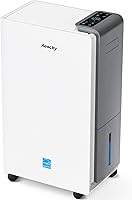
AEOCKY 6,000 Sq Ft Dehumidifier
Best for running costs in a damp climate - 6
 Best for a finished, lit crawl spaceCheck it
- 7
 Check it
Moiswell 155 Pint Commercial Dehumidifier with Drain
Best for drying out a flooded crawl space - 8
 Check it
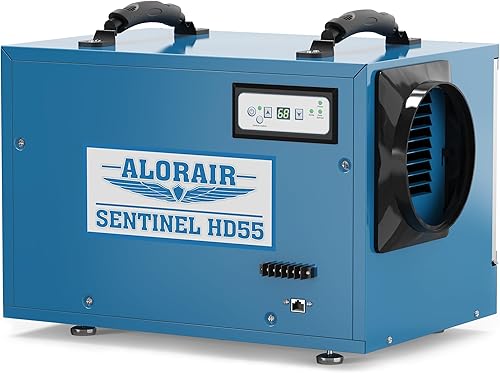
ALORAIR Sentinel HD55S 120 Pint Dehumidifier
Best for cold crawl spaces - 9
 Check it
Yaufey 70 Pint Commercial Dehumidifier
Best for precise humidity settings
The best dehumidifiers for a small crawl space
The ToLife wins on fit and simplicity for a tight, reachable space. The rest of the picks each solve one part of the crawl space problem better: continuous drainage, joist mounting, cold air or running cost.
Pick by the constraint that matters most in your house.
ToLife Dehumidifier: Best overall for tight low crawl spaces
- Measures 8.27 x 5.55 x 13.78 in
- 95 fl oz tank
- 2 modes including sleep mode
- 7-color ambient light
A compact unit that slots into a narrow joist bay without plumbing. The tank has to be emptied by hand, so it suits a crawl space you can reach.
Pros
- Smallest footprint in this group
- Carry handles for moving it in and out
- Auto shutoff when the tank is full
Cons
- No built-in pump or drain hose
- Tank fills quickly in very damp air
ToLife suits a crawl space you can get into without crawling on your belly. At 8.27 x 5.55 x 13.78 in it is the smallest unit in this group, so it slips into a narrow opening or a short joist bay where the metal machines won't go.
The 95 fl oz tank has to come out and be emptied, which is fine if you already check the space weekly.
It runs two modes, a powerful setting and a low-speed sleep mode rated under 30 dB. That quiet running matters if the crawl space sits under a bedroom.
The 7-color light is a small bonus for a space you use for storage.
Two things to know. It uses semiconductor condensation rather than a compressor, so it moves less water per day than the commercial units here.
ToLife also says it works best in small rooms rather than whole floors. For a 1,000 sq ft crawl space in moderate humidity, that is enough.
For a wet dirt floor, it isn't. See our small dehumidifier picks if you want more compact options.
ALORAIR 113 Pints Crawlspace Dehumidifier for Commercial: Best for continuous drainage
- 113 pints per day at saturation, 53 at AHAM
- No tank, drains automatically
- Auto defrost
- MERV-1 filter
A horizontal metal unit built to sit in a crawl space and drain without anyone checking a bucket. Its size rules out the shallowest spaces.
Pros
- Drains without a tank
- Auto defrost for cold months
- Metal casing stands up to damp
Cons
- Larger than the ToLife
- Weighs 41.7 lb
ALORAIR's HD55 is the pick when you want to set the humidity and forget the space. There is no tank inside; the unit drains itself through a hose, so nobody has to pour out water.
That single feature is why it ranks so high for a crawl space you only visit twice a year.
It removes 113 pints per day at saturation and 53 pints at AHAM conditions, covering up to 1,200 sq ft. The metal casing shrugs off damp air better than plastic, and the MERV-1 filter keeps dust off the internal parts.
An auto defrost cycle keeps it running when the air turns cold.
The trade-off is size and weight. At 19.2 x 12.2 x 13.3 in and 41.7 lb, it needs a real joist bay and two people to lower it in.
If your access hatch is small, plan the entry before the unit arrives. ALORAIR backs it with a 6-year limited warranty.
Waykar 125 Pints Crawl Space Dehumidifier: Best for water-damaged crawl spaces
- 125 pints per day at 95 F and 90% RH
- Built-in pump with 16.4 ft hose
- 10% to 90% RH control
- Auto defrost and 24-hour timer
The pump lets it push water up and out of a low space where gravity drainage is impossible. Capacity is far beyond what a small crawl space needs.
Pros
- Built-in pump for uphill drainage
- Wide humidity range
- Rotary compressor with auto defrost
Cons
- Overkill for a very small footprint
- Weighs 49.8 lb
Waykar is the choice for a crawl space that has already taken on water. Its built-in pump and 16.4 ft hose push water upward or across a long run, so you can discharge out of a vent or into a sink without relying on gravity.
A 6.6 ft gravity hose is also included for downward drainage.
The 125 pints per day rating at 95 F and 90% RH is more capacity than a small space needs in normal conditions. Where it earns its place is after a leak or a wet season, when the floor needs fast drying.
The 10% to 90% RH control lets you set a precise target rather than a numbered dial.
It is a metal-bodied unit with a rotary compressor and auto defrost, and Waykar says it measures 1/3 smaller than a traditional upright. Even so, 49.8 lb and a 19.29 x 13.58 x 12.6 in footprint make it a two-person job to install.
Waykar provides 1-year warranty plus 5-year compressor protection.
Aiusevo 70 Pints Crawl Space Dehumidifier: Best for fitting between floor joists
- 16.5 x 13.7 x 12.5 in body
- Gravity or pump drainage
- 70 pints per day at 95 F and 90% RH
- Auto restart after outages
Its low horizontal shape slips under joists, and the included pump hose sends water up and away. Lighter than most of the metal-bodied units here.
Pros
- Floor or ceiling mounting
- Pump and gravity drain options
- Washable filter
Cons
- No Wi-Fi control built in
- Needs a separate remote for upstairs control
Aiusevo suits a low-clearance space where the unit has to live under the floor rather than on top of it. Its 16.5 x 13.7 x 12.5 in body can sit between joists or hang from the ceiling, and 39 lb is light enough to lift into place with help.
It offers both drainage paths: a 16.4 ft pump hose for uphill discharge and a 6.6 ft gravity hose for a floor drain. The 70 pints per day at 95 F and 90% RH rating is sensible for a small space.
An auto restart after a power cut means it comes back on without a reset.
The touchscreen panel handles humidity, a timer and temperature readout. There is no Wi-Fi, so monitoring from upstairs needs the separate wired remote.
For a set-and-forget install in a space you don't enter often, the pump and the mounting options are the reasons to choose it over the ToLife.
AEOCKY 6,000 Sq Ft Dehumidifier: Best for running costs in a damp climate
- ENERGY STAR Most Efficient 2024
- 105 pints per day in humid midsummer
- Auto defrost
- 1.45 gal tank
A tall upright that draws less power for the moisture it removes. Its height means it needs more headroom than the horizontal crawl space units.
Pros
- Top-tier efficiency rating
- Works below 65 F
- Quiet at 44 dB on low
Cons
- Taller upright shape
- Tank needs emptying unless drained
AEOCKY is the pick when the dehumidifier will run for months and the power bill matters. It holds ENERGY STAR Most Efficient 2024, a stricter tier than the basic Energy Star label.
AEOCKY says the rating means up to 50% better efficiency than non-rated units, and running a unit 24/7 all season makes that difference real.
It removes 105 pints per day at 95 F and 95% RH, and 83 pints in a warm, damp basement. Auto defrost keeps it working below 65 F, a point where ordinary units frost up.
The 1.45 gal tank needs draining unless you connect a hose.
The catch is its shape. At 14.45 x 8.66 x 24.09 in it stands tall rather than lying flat, so it needs more headroom than a horizontal crawl space unit.
If your space has 25 in of clearance, it works well. If it has 14 in, it doesn't.
It runs at 44 dB on low, quiet enough to ignore.
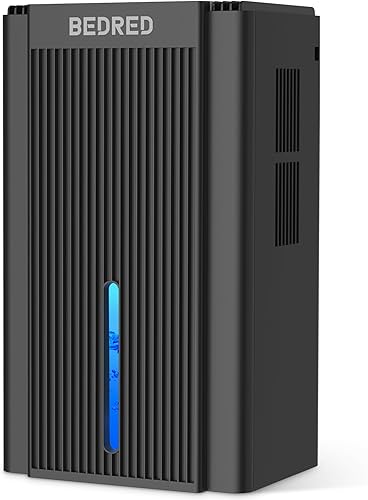
BEDRED Dehumidifier: Best for a finished, lit crawl space
- Measures 6.7 x 8.7 x 14.6 in
- 95 oz tank
- 7-color ambient light
- Auto shutoff
The smallest footprint here, with a light that makes a usable crawl space easier to work in. It is a light-duty unit, not a whole-space dryer.
Pros
- Tiny footprint
- Sleep mode with lights off
- Auto shutoff when the tank fills
Cons
- Tank only, no pump
- Best suited to small spaces
BEDRED is the tiniest-height option in the group at 6.7 x 8.7 x 14.6 in. That makes it the pick for a crawl space so cramped that even the ToLife is a squeeze.
The 7-color ambient light and sleep mode suit a space you use as storage and want to see clearly.
It uses semiconductor cooling and covers up to 1,000 sq ft. The 95 oz tank shuts the unit off automatically when full.
Think of it as a humidity keeper for a small, sealed space rather than a machine for drying a wet floor.
The trade-offs are honest. There is no pump or drain hose, so you empty the tank by hand.
It is plastic-bodied and light, which helps with installation but won't match a metal unit for years of damp air. Choose it for fit and lighting, not for water removal volume.
A whole house dehumidifier is the better answer if the moisture problem runs through the house.
Moiswell 155 Pint Commercial Dehumidifier with Drain: Best for drying out a flooded crawl space
- 155 pints per day maximum, 70 at AHAM
- 265 CFM airflow
- 6.5 ft gravity drain hose
- Auto defrost and auto restart
The highest raw water removal here, aimed at spaces that are wet rather than merely humid. Its length needs a longer joist bay.
Pros
- Highest daily capacity here
- Energy Star certified
- Gravity drain with a 6.5 ft hose
Cons
- Longest body in this group
- Weighs 63 lb
Moiswell is the heavy-duty option for a crawl space that is genuinely wet. It removes up to 155 pints per day maximum and 70 pints at AHAM, with 265 CFM of airflow, enough to dry a soaked floor rather than just hold humidity steady.
The 6.5 ft gravity drain hose means no tank to empty.
It is Energy Star certified and includes auto defrost and auto restart after a power outage. The alloy steel body is built for commercial settings and the horizontal design fits between joists.
The downside is its length. At 22.5 x 14 x 14.7 in it needs a longer bay than any other pick here, and 63 lb makes installation a two-person task.
It also costs more to run than the smaller units. For a small, only slightly damp crawl space, it is more machine than you need.
For a space that floods, it earns its keep. Our commercial dehumidifier guide covers bigger water-damage jobs.
ALORAIR Sentinel HD55S 120 Pint Dehumidifier: Best for cold crawl spaces
- 120 pints per day at saturation, 55 at AHAM
- Energy Star certified
- Low-temperature operation
- 6-year limited warranty
The same body as the HD55 with more capacity and a stated low-temperature range. A solid pick for unheated crawl spaces under about 1,300 sq ft.
Pros
- Runs in low temperatures
- MERV-1 filter
- Long warranty coverage
Cons
- Higher price for similar capacity
- Sits lower in this ranking than the HD55
The Sentinel HD55S is the cold-weather version of the ALORAIR body. It adds a stated low-temperature operating range and a 6-year limited warranty, and it removes 120 pints per day at saturation and 55 at AHAM across up to 1,300 sq ft.
Energy Star certification keeps its running cost reasonable.
It shares the 19.2 x 12.2 x 13.3 in metal body and the tank-free drainage of the HD55. Auto defrost pauses the compressor and runs the fan to clear frost, then resumes.
That cycle is what lets it keep working through a cold winter in an unheated space.
It scores lower than the HD55 here for two reasons. The HD55S offers slightly more coverage, but the HD55 costs less for a small crawl space that stays above freezing.
Pick the HD55S only if your space runs cold enough that low-temperature operation is the deciding factor.
Yaufey 70 Pint Commercial Dehumidifier: Best for precise humidity settings
- 10% to 90% RH control
- 70 pints per day at 95 F and 90% RH
- 159 CFM airflow
- Auto defrost
The widest humidity dial here, useful when you want to set an exact level rather than guess at a numbered knob. Gravity drain only, with no pump.
Pros
- 10% to 90% RH control
- Compact horizontal body
- Energy Star certified
Cons
- No built-in pump
- Lowest score in this group
Yaufey is for the buyer who wants to set an exact humidity number. Its control covers 10% to 90% RH, wider than the 30% to 80% range on many home units, so you can target a specific reading rather than pick a notch on a dial.
It removes 70 pints per day at 95 F and 90% RH with 159 CFM of airflow.
It is a compact 12.99 x 16.54 x 11.81 in metal unit, Energy Star certified and fitted with auto defrost. The digital panel handles the target and a 24-hour timer.
It can sit on the floor, on a counter or mounted on joists.
The limitation is drainage. There is no built-in pump, only a gravity port and a 6.56 ft hose, so the unit needs a downhill path for water.
If your crawl space has no slope to a drain, the Aiusevo or Waykar pump setup is the better fit. Yaufey covers 2 years general plus 5 years on the compressor.
How these crawl space dehumidifiers compare
Every unit here removes moisture. They split mainly on how much space they need and how the water leaves.
Fit and drainage decide the shortlist; capacity and running cost decide the final choice.
| Product | Best for | Size | Tank | Stated coverage | Our score |
|---|---|---|---|---|---|
| ToLife Dehumidifier | overall for tight low crawl spaces | 8.27 x 5.55 x 13.78 in | 95 fl oz | Up to 1000 sq ft | 9.5 |
| ALORAIR 113 Pints Crawlspace Dehumidifier for Commercial | continuous drainage | 19.2 x 12.2 x 13.3 in | Up to 1200 sq ft | 9.3 | |
| Waykar 125 Pints Crawl Space Dehumidifier | water-damaged crawl spaces | 19.29 x 13.58 x 12.6 in | Up to 6500 sq ft | 9.0 | |
| Aiusevo 70 Pints Crawl Space Dehumidifier | fitting between floor joists | 16.5 x 13.7 x 12.5 in | Up to 4000 sq ft | 8.9 | |
| AEOCKY 6,000 Sq Ft Dehumidifier | running costs in a damp climate | 14.45 x 8.66 x 24.09 in | Up to 6000 sq ft | 8.8 | |
| BEDRED Dehumidifier | a finished, lit crawl space | 6.7 x 8.7 x 14.6 in | Up to 1000 sq ft | 8.7 | |
| Moiswell 155 Pint Commercial Dehumidifier with Drain | drying out a flooded crawl space | 22.5 x 14 x 14.7 in | Up to 6000 sq ft | 8.3 | |
| ALORAIR Sentinel HD55S 120 Pint Dehumidifier | cold crawl spaces | 19.2 x 12.2 x 13.3 in | Up to 1300 sq ft | 7.5 | |
| Yaufey 70 Pint Commercial Dehumidifier | precise humidity settings | 12.99 x 16.54 x 11.81 in | Up to 5000 sq ft | 7.4 |
How we compared these dehumidifiers
We compared units on the facts that decide whether a dehumidifier works in a crawl space: body size against typical joist bays and access hatches, whether water leaves by tank, gravity hose or pump, and the stated daily water removal at AHAM conditions. Our score weighs specs, features and buyer feedback against what you're shopping for.
We also weighed cold-weather operation. A crawl space runs cooler than living space, so an auto defrost cycle and a low-temperature rating matter more here than in a warm bedroom.
Units without those features scored lower for this use even when their raw capacity was high.
Price tier played a part but didn't lead. A budget unit that fits and drains beats a premium unit that needs a joist bay you don't have.
The ToLife takes the top score because it fits almost anywhere and asks the least of the owner. The commercial picks earn their places for spaces where the ToLife is too small a tool.
What size dehumidifier fits a small crawl space?
A unit under 14 in tall and about 20 in long fits most crawl spaces. Measure your joist bay height and your access hatch before anything else.
A horizontal unit like the Aiusevo or ALORAIR needs roughly 13 in of clearance and 16 to 20 in of length.
The smaller home units, the ToLife and BEDRED, sit at 13.78 and 14.6 in tall and about 8 in wide. They go through a small hatch and stand in a corner without blocking the space.
If your access is a 2 ft by 2 ft opening in a closet floor, that matters more than capacity.
Capacity matters second. A crawl space under 1,500 sq ft rarely needs more than 70 pints per day at AHAM.
The larger commercial units here earn their place when the floor is wet or the space is bigger than it looks.
Horizontal units vs upright units
Horizontal units lie flat and fit between joists. They suit spaces you enter rarely and want set up once.
Upright units stand taller and often run quieter. The AEOCKY at 24.09 in tall is the upright option here.
When a bigger unit is the right call
If the floor stays wet after rain or the space is over 2,000 sq ft, step up to a 100-pint class machine. A small unit will run nonstop and never get ahead of the moisture.
Does a crawl space dehumidifier need a pump or a drain?
A drain setup is better than a tank for a crawl space you rarely enter. A pump sends water upward or across a long run.
A gravity hose works when the floor slopes to a drain or the unit sits above one.
The tank units here, the ToLife and BEDRED, hold 95 fl oz. In very humid air that can fill in a day.
If you check the space weekly, a tank is fine. If you visit twice a year, choose a pump or gravity model.
Two picks here include a pump: the Waykar and the Aiusevo. Both supply a 16.4 ft pump hose plus a shorter gravity hose.
The ALORAIR HD55 and HD55S have no tank and drain automatically. Yaufey and Moiswell drain by gravity only.
Where to send the water
Run the hose to a floor drain, a sump pit or out through a vent. Avoid sending water onto bare dirt, which just adds moisture back.
Check that the hose end sits downhill from the unit or that the pump can lift the water.
Keeping the space closed
Close the crawl space vents while the dehumidifier runs. Open vents pull humid outside air in and make the unit work against a supply it cannot beat.
Sealing vents plus a vapor barrier over the floor gives the unit a closed box to dry.
How much humidity should a crawl space stay at?
Keep a crawl space between 45% and 55% relative humidity. Below 45% wastes energy.
Above 60%, mold and wood rot have room to start.
A cheap humidity monitor on a joist tells you whether the unit is keeping up.
Most units here let you set a target. The Yaufey's 10% to 90% RH range gives the finest control.
The Waykar matches it at 10% to 90%. The AEOCKY offers 40% to 80%, enough for crawl space work.
Set the target and let the unit cycle on and off. Running a dehumidifier flat out in a sealed space dries the air past what the structure needs.
The auto shutoff and auto restart features on most picks here handle that cycling for you.
Reading the humidity in the space
Place the monitor away from the dehumidifier's exhaust. The air leaving the unit is drier than the room, so a sensor next to the vent reads low.
Clip it to a joist at mid-height for a fair reading.
What to do about a wet dirt floor
Lay a sealed vapor barrier over the dirt before running a dehumidifier. The liner stops ground moisture from feeding the air.
Without it, the unit dries the air and the floor puts the moisture straight back. A whole house dehumidifier helps when the damp spreads into living space above.
Which crawl space dehumidifier handles cold air best?
Pick a unit with auto defrost and a stated low-temperature range. Cold crawl spaces frost up ordinary dehumidifiers, and an iced coil stops removing water.
Every commercial-grade unit here has auto defrost; the AEOCKY adds operation below 65 F.
The ALORAIR HD55S and HD55, the Waykar and the Moiswell all run an auto defrost cycle that pauses the compressor while the fan clears the ice. The Aiusevo and Yaufey do the same.
The two light-duty units, the ToLife and BEDRED, are built for warmer rooms.
If your crawl space stays above 60 F year-round, cold-weather features matter less. If it drops toward freezing in winter, the HD55S or AEOCKY is the safer choice.
Both keep removing moisture when a simpler unit would shut down.
Insulating the space first
A sealed and insulated crawl space holds warmth and stays above the frost point. That lets a wider range of dehumidifiers work.
Insulation also cuts the load on the unit. Do that work before buying if the space runs cold.
Do you need a commercial-grade dehumidifier for a small space?
Only if the space is wet or large. A commercial unit like the Moiswell or Waykar removes far more water per day than a small crawl space needs in normal conditions.
Buy one when the floor stays wet, after a leak or flood, or when the space is bigger than 2,000 sq ft.
For a small, sealed crawl space in moderate humidity, a home unit like the ToLife does the job at a lower price and a smaller footprint. The commercial units here weigh 40 to 63 lb and need a longer joist bay, which is a real installation cost.
The middle ground is the ALORAIR HD55 or the Aiusevo. Both fit a real crawl space, both drain without a tank, and both carry enough capacity for a wet season without the bulk of the biggest machines.
Our commercial dehumidifier guide covers units built for water damage.
When to rent instead of buy
For a one-time flood cleanup, a rental unit for a few days costs less than buying. Buy when the damp returns every season.
A dehumidifier that runs most of the year pays for itself in protected joists and stored goods.
Verdict: which dehumidifier is right for your crawl space?
The ToLife Dehumidifier is the best dehumidifier for a small crawl space for most homes. It fits a hatch, runs quietly and costs less than the commercial units.
Empty the tank once a week and it keeps a small, sealed space at a steady humidity.
Choose the ALORAIR 113 Pints if you want continuous drainage and never want to empty a tank. Pick the Waykar or Aiusevo when a pump is the only way to get water out of a low space.
The AEOCKY suits a cold climate and a long-running unit where power use matters. The Moiswell is for a wet floor or a large space that needs fast drying.
Measure the joist bay and the hatch first. That one step narrows the list to units that actually fit.
Then choose the drainage path and the capacity you need. The small dehumidifier guide and the large basement roundup cover the options when the space is bigger or smaller than a crawl space.
Our top 3 picks at a glance
-
1
-
2
Best for continuous drainage
ALORAIR 113 Pints Crawlspace Dehumidifier for Commercial
9.3/10 our score
See it on Amazon -
3
Best for water-damaged crawl spaces
Waykar 125 Pints Crawl Space Dehumidifier
9.0/10 our score
See it on Amazon
Frequently asked questions
How many pints per day does a small crawl space need?
For a crawl space under about 1,500 sq ft, 50 to 70 pints per day at AHAM conditions covers most homes. Look for the AHAM figure rather than the saturation number, because saturation ratings assume extreme heat and humidity.
A small, sealed space rarely needs a 100-pint machine.
Can a dehumidifier sit on a dirt crawl space floor?
It can, but place it on a vapor barrier or a raised pad first. A dirt floor releases moisture straight into the air and splashes the unit's base.
A sealed liner also stops ground moisture from feeding the problem the dehumidifier is trying to solve.
Do crawl space dehumidifiers need a dedicated outlet?
Most full-size crawl space units run on a standard 115-volt circuit but draw more current than a light-duty home unit. Check the amperage on the label against the circuit before plugging in.
An electrician can add a dedicated outlet if the existing one is shared.
What is auto defrost and why does it matter?
Auto defrost briefly stops the compressor and lets the fan melt frost off the coils. Without it, a unit running in cold air ices up and stops removing moisture.
Crawl spaces often stay cooler than living space, so this feature matters more there than in a warm room.
Should the crawl space vents stay open or closed with a dehumidifier?
Close the vents for the season when you run a dehumidifier. Open vents pull humid outside air straight back into the space, so the unit fights an endless supply.
Sealing vents and covering the floor liner gives the dehumidifier a closed box to dry.
How often does the water tank need emptying?
A 95 fl oz tank in very humid air can fill in under a day, so plan a daily check. A unit with a pump or gravity drain removes that chore entirely.
For a crawl space you rarely enter, choose a drain setup over a tank.